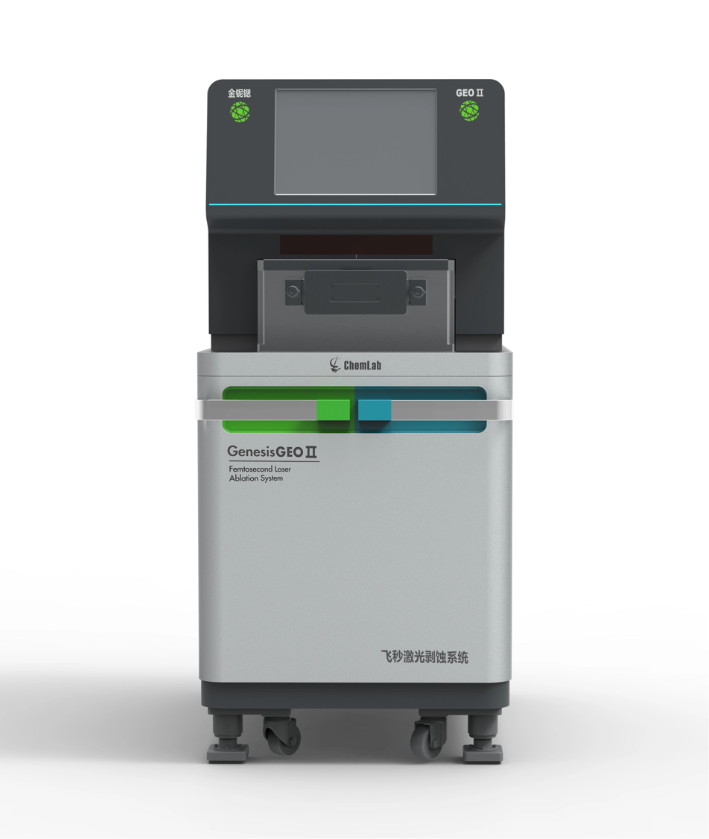
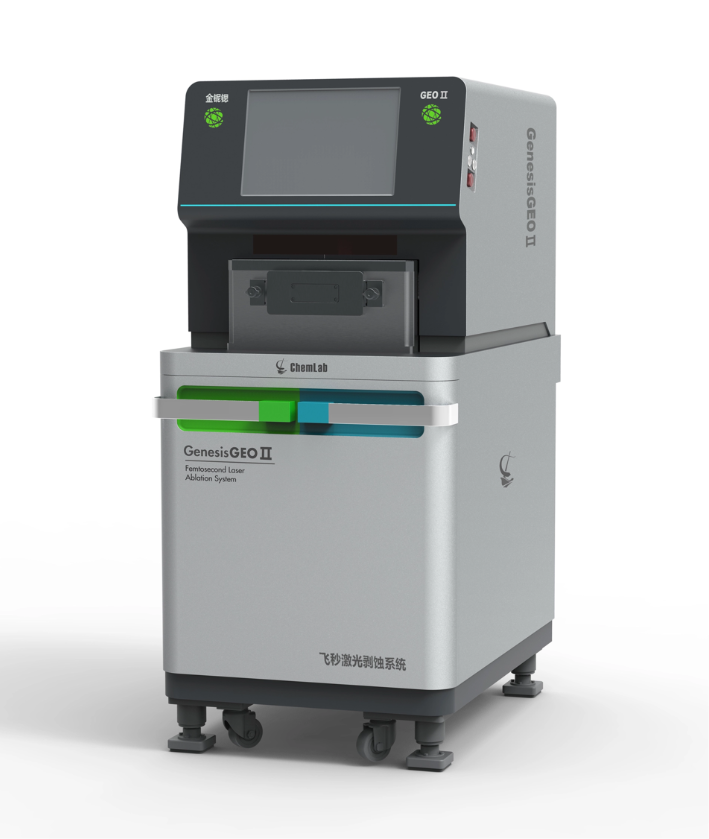
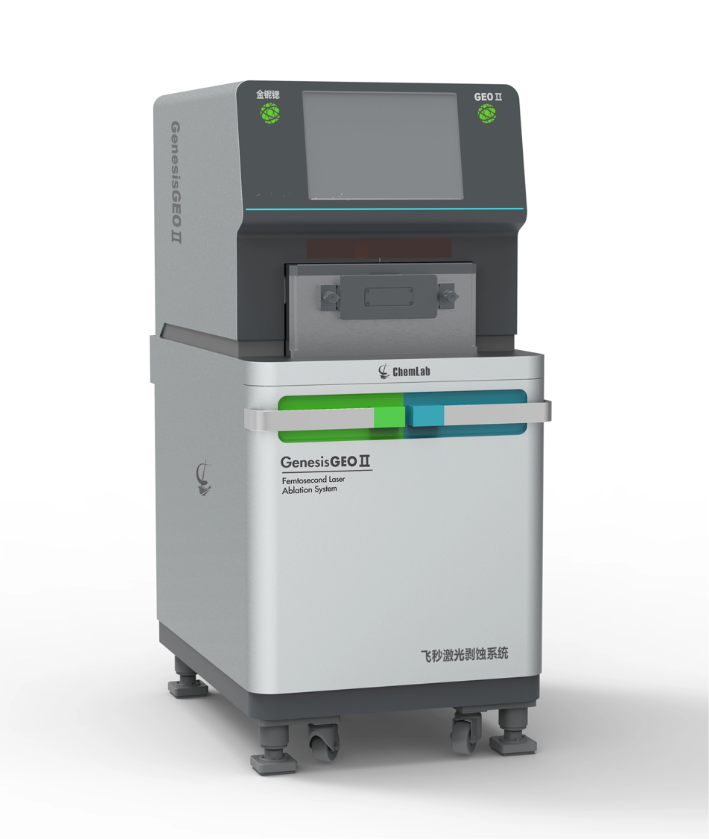


GenesisGEO II is a comprehensively upgraded laser ablation system developed by Shanghai Chemlab Instrument Co., Ltd. based on the GenesisGEO platform.The system introduces two core technological innovations: First, it successfully implements the laser ablation solid-phase standard addition method, extending the principle of standard addition in solution analysis to the field of solid micro-area analysis, thereby effectively overcoming quantitative biases caused by matrix effects. Second, it innovatively adopts a dual-optical path architecture for both quantitative analysis and imaging, breaking through the mutual constraints on analytical capabilities found in traditional instruments and achieving a seamless integration of high-precision quantitative analysis and high-resolution imaging.
 技术特点
技术特点
GenesisGEO II Core Innovation: Laser Ablation Solid Standard Addition Method
Different matrix samples exhibit significant variations in response during ionization and require correction using an internal standard element.To overcome the matrix effect, the standard addition method can be used to eliminate interference in the analysis of solutions such as blood, seawater, and soil extracts.
However, it is difficult to add internal standard elements to solid samples as easily as in liquid analysis, which limits quantitative accuracy and poses a major obstacle to the precision of micro-area analysis.In micro-area elemental analysis in fields such as earth sciences and materials science, the matrix effect has long been a fundamental challenge for traditional laser ablation–inductively coupled plasma mass spectrometry (LA-ICP-MS) techniques.
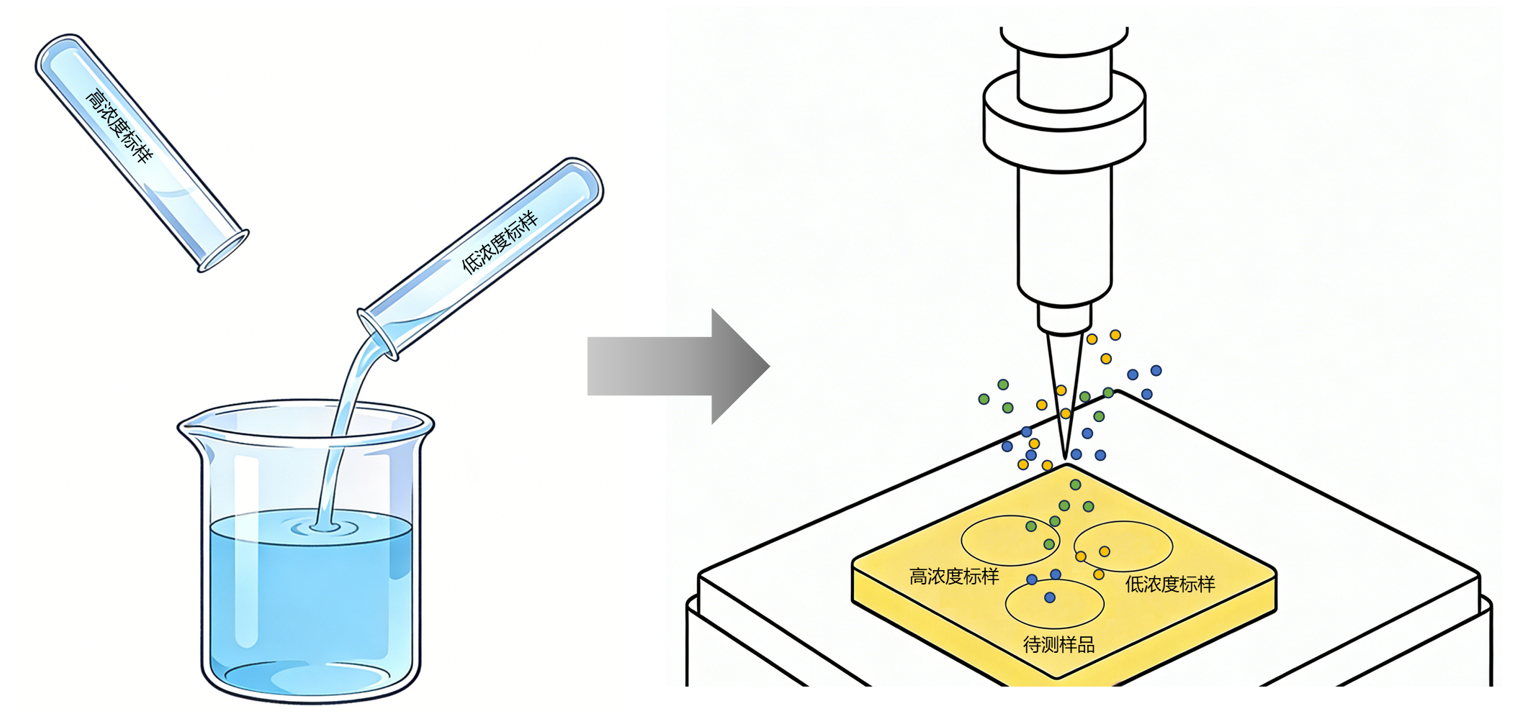
Building on its laser ablation technology platform, Shanghai Chemlab Instrument Co., Ltd has successfully extended the principle of standard-addition in liquid analysis to the field of solid micro-area analysis, introducing the laser ablation solid standard-addition method.

Technical Principles:
Using a high-precision galvanometer optical system, two or more different sample materials are sequentially ablated by a laser in an extremely short time (on the order of 10 ms). The resulting sample aerosol is instantly mixed and homogenized in the sample cell before entering the ICP ion source. This technology offers a new solution for overcoming the limitations of matrix effects.
Technical Process:
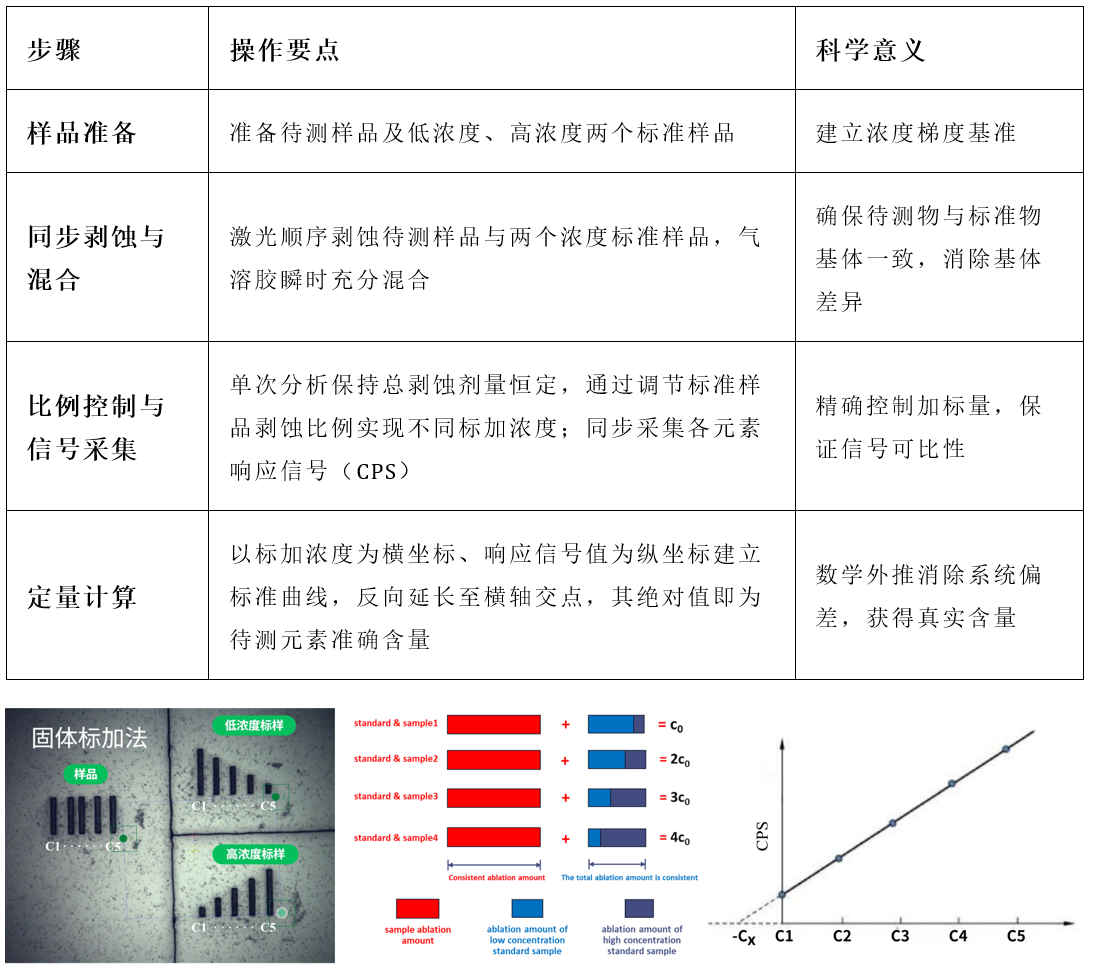
Technical Advantages:
Consistent laser ablation behavior:Compared to nanosecond lasers, the ablation behavior of femtosecond lasers is less influenced by substrate properties, and there is little variation in ablation efficiency across different materials. The system is equipped with multi-substrate correction functions based on volume and mass, further enhancing quantitative accuracy.
Compatibility with multiple calibration methods:Support for various quantification strategies, including the solid standard addition method, the solid isotope dilution method, and the solid double-dilution method, is expected to address and meet analytical requirements across different application scenarios.
No inner tag elements required:By utilizing in-situ aerosol mixing technology, the influence of the matrix effect is effectively reduced, overcoming the limitations of traditional methods that rely on internal standard elements.
Achieve matrix composition matching:The aerosol from the sample under test and the reference material are thoroughly mixed in the sample chamber to ensure a high degree of consistency in matrix composition and improve the match in ionization efficiency.
GenesisGEO II Dual-Path Architecture: A Revolution in Quantification and Imaging
Traditional laser ablation systems often face the following challenges:Imaging analysis and quantitative analysis require different hardware configurations, making it difficult to perform both simultaneously; high spatial resolution often comes at the expense of detection sensitivity; and there is no continuous adjustment capability between the large spot size required for major element analysis and the small spot size required for trace element micro-area analysis, making it impossible to perform both major and trace element analysis simultaneously.
The dual-optical-path design of the GenesisGEO II specifically addresses these requirements.GenesisGEO II represents a comprehensive upgrade built upon the proven technical architecture of GenesisGEO. It innovatively employs a dual-optical-path architecture for both quantitative analysis and imaging, achieving a seamless integration of high-precision quantitative analysis and high-resolution imaging, thereby marking a methodological breakthrough in solid-state microanalysis.
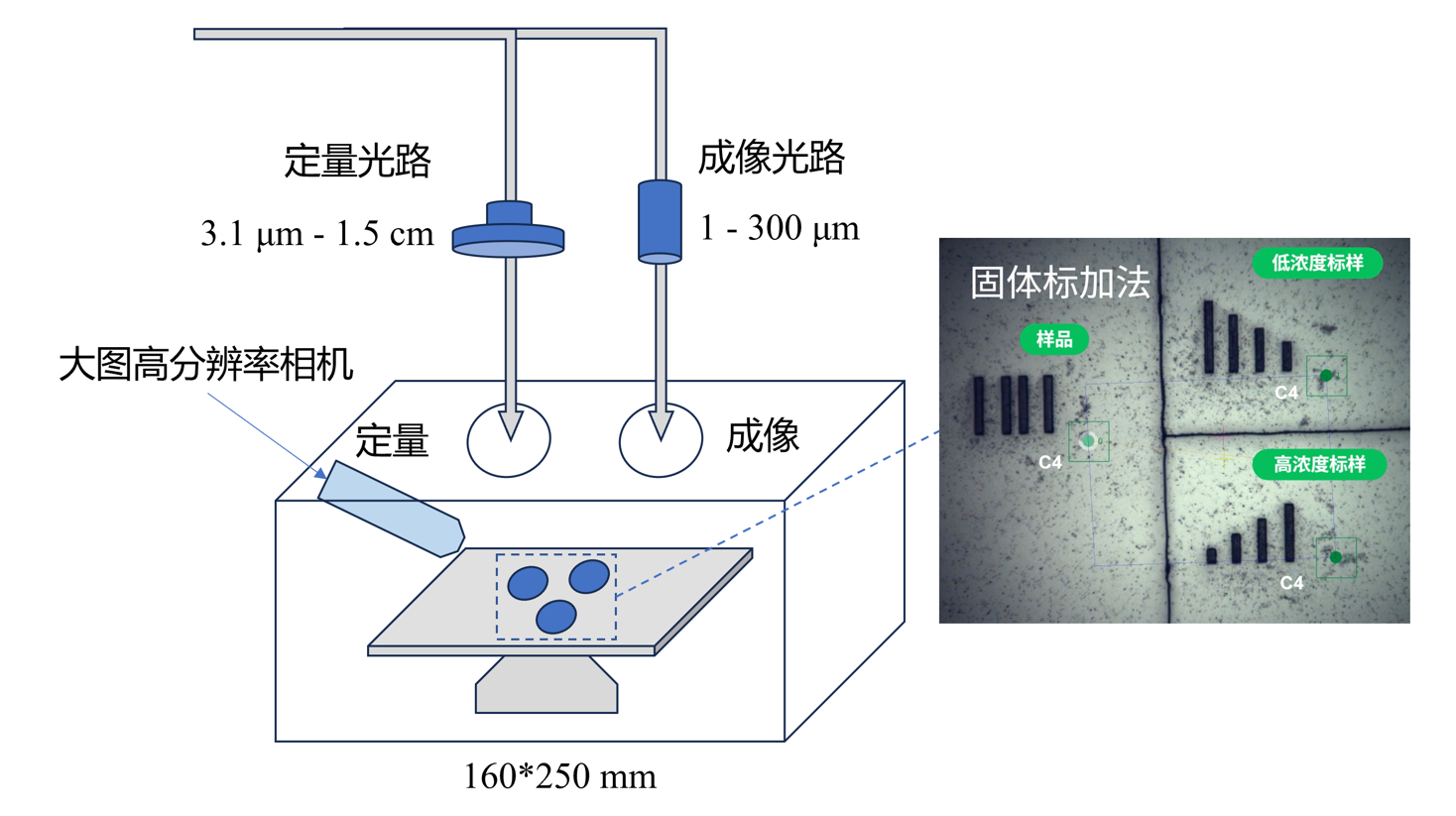
Quantitative optical path — It offers continuous adjustment from a minimum spot size of 3.1 μm to a maximum spot size of 1.5 cm, supports solid-phase immunoassays, and meets the needs of both high-precision quantitative analysis of micro-areas and homogenization testing of large-volume samples.
Imaging optical path — The spot size is continuously adjustable from 1 to 300 μm and can be upgraded to 0.5 μm; the gas flow path structure within the compact sample chamber has been optimized to enable rapid gas purging and high-resolution imaging, ensuring image clarity and precise localization of the ablation area.
Dual-beam coordination —“One-click” quick switching eliminates the need to disassemble or replace the analysis cell and imaging cell, significantly improving experimental efficiency and avoiding the system disturbances and contamination risks associated with changing sample chambers on traditional equipment.
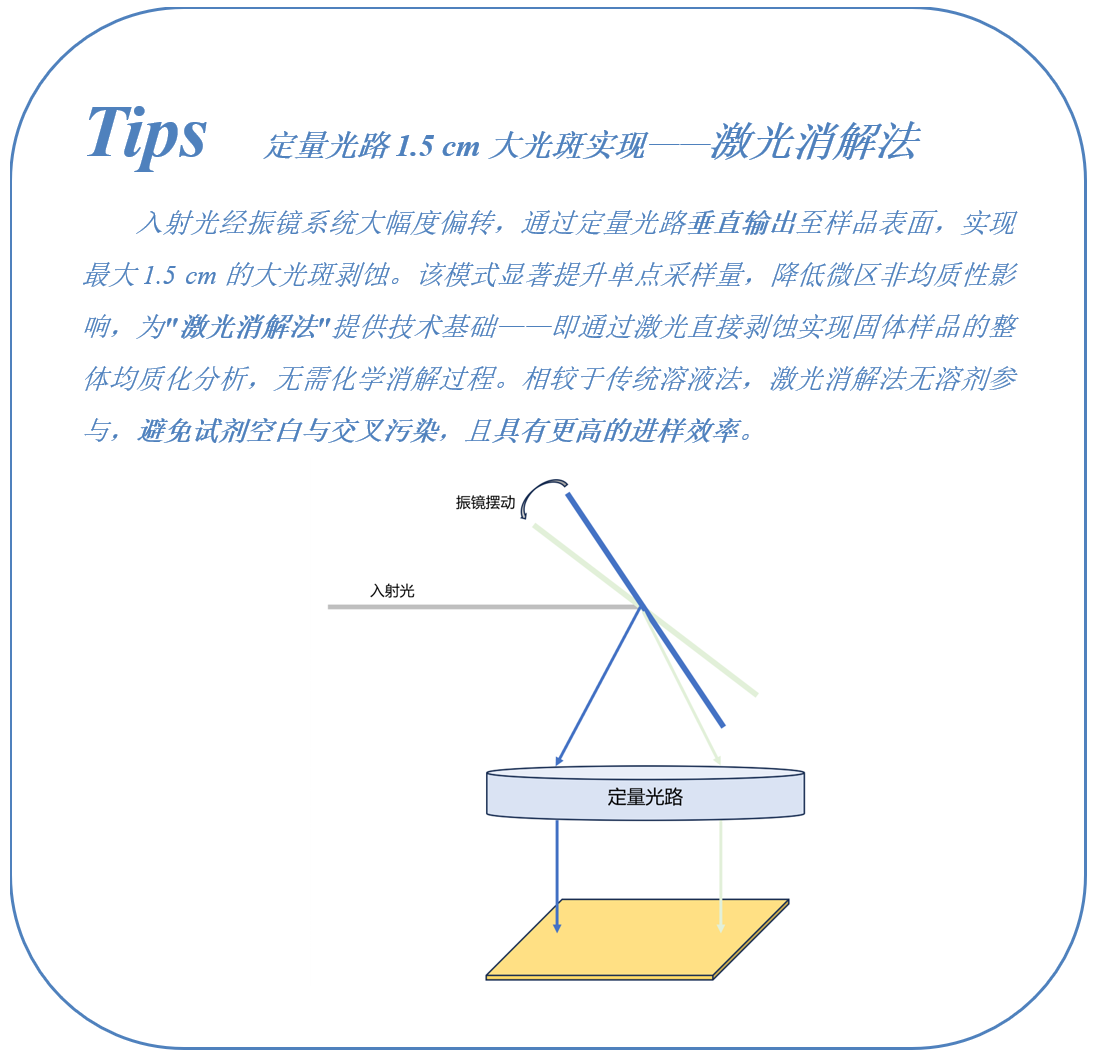
Technical Summary:
The GenesisGEO II raster laser ablation system combines a dual-beam raster laser ablation technology platform with the solid-state standard addition method, offering a new technical solution to the matrix effect issue in solid-state microanalysis. It improves the accuracy of quantitative analysis while maintaining high spatial resolution. This system provides researchers in fields such as earth sciences and materials science with a microanalysis solution featuring matrix self-matching, high spatial resolution, and high quantitative accuracy.
相关资料
Copyright 2024 Shanghai CHEMLAB Instrument Co., Ltd. All Rights Reserved
Shanghai ICP Filing No.65656565
 Contact us