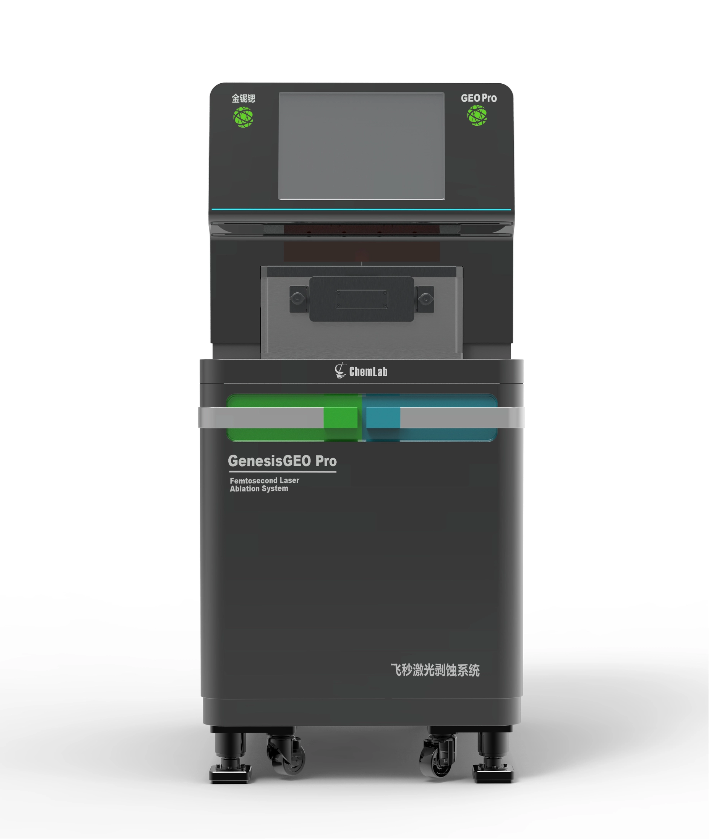
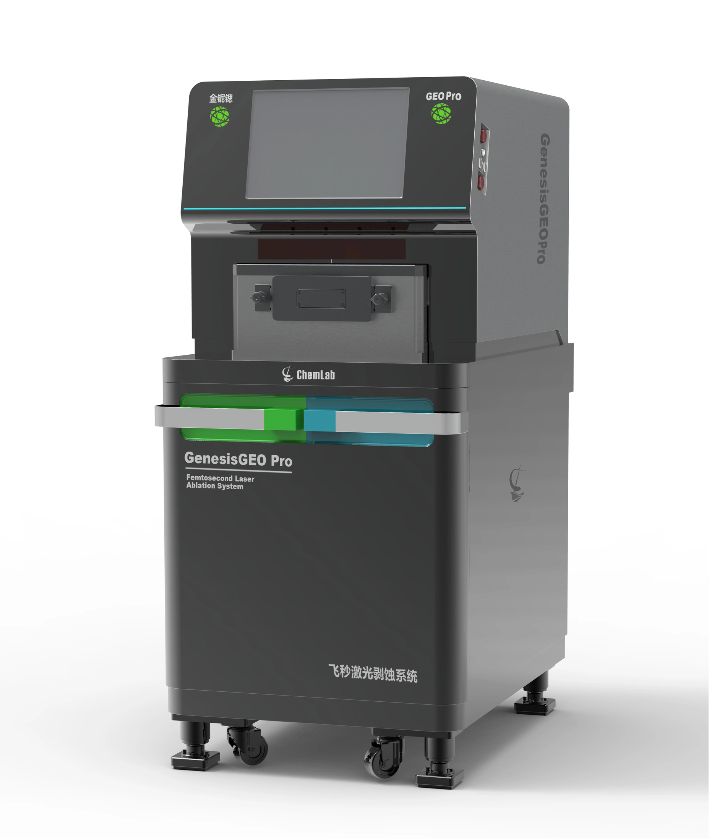
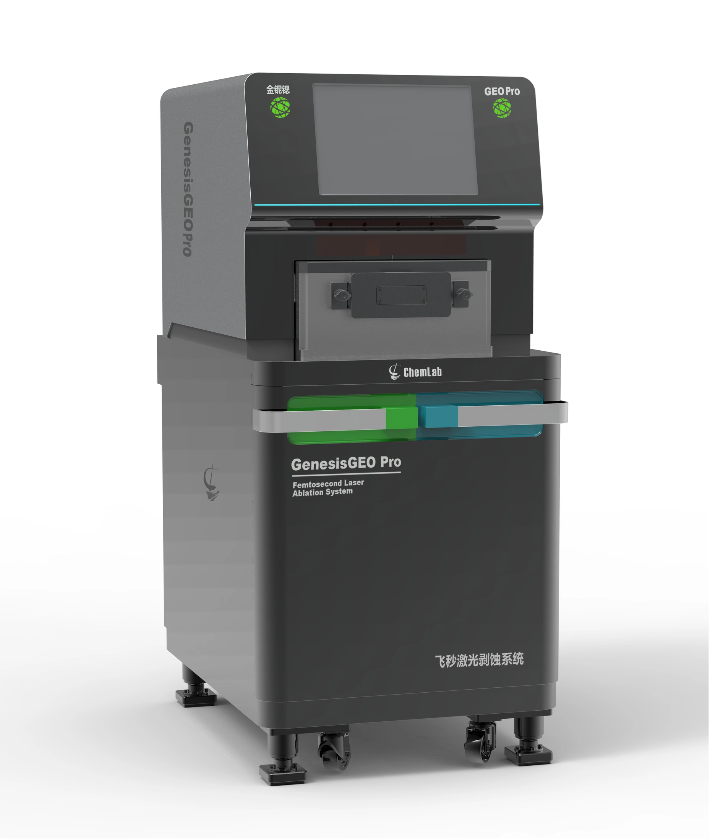


GenesisGEO Pro is a flagship ablation system developed in-house by Shanghai Chemlab Instrument Co., Ltd. As the latest addition to the GenesisGEO series, it is designed specifically for earth scientists striving for excellence in their research. Built upon the fully featured architecture of the GenesisGEO II, the system incorporates a high-performance imported deep-ultraviolet femtosecond laser and combines cutting-edge optical technology with precision mechanical design to meet the most advanced and demanding requirements of micro-area analysis research.
 技术特点
技术特点
Optimal wavelength, optimal pulse width—designed for cutting-edge research
In the field of laser ablation, the key to analytical accuracy lies in two core physical parameters: wavelength and pulse width.These factors directly determine whether the ablation process is “cold” or “hot,” thereby affecting the sample's distillation behavior and the reliability of the analytical results.
short wavelength:The high energy of the photons helps improve the material's absorption efficiency of laser energy, resulting in rapid ablation and minimizing the heat-affected zone at its source.
Ultra-short pulse width:This is the key to achieving true “cold ablation,” as it significantly suppresses heat diffusion and element fractionation, ensuring a clear ablation boundary, stable signals, and reliable data.
To this end, the GenesisGEO Pro employs a proven, high-performance industrial-grade femtosecond laser as its core light source, delivering ultra-short pulse widths (fundamental pulse width < 190 fs) and supporting dual-wavelength output at 343 nm and 257 nm.With its exceptional industrial-grade stability, ultra-short pulse width, and flexible pulse control capabilities, the system is designed to meet the ablation requirements of various solid materials and complex substrates, creating an ideal micro-area analysis and ablation platform through the optimal combination of wavelength and pulse width.
Key Advantages: Precision, Flexibility, and Stability
Ultra-short pulse width — Fundamental pulse width < 190 fs, achieving extremely high peak power density, effectively suppressing thermal effects, ensuring sharp ablation edges, and minimizing fractional ablation.
Precise pulse control — The pulse interval is precisely adjustable, ensuring accurate control over ablation depth and ablation rate.
Dual-wavelength on-demand configuration — The 343 nm wavelength is suitable for routine high-precision analysis, offering a balance of stability and cost-effectiveness; the 257 nm wavelength is designed to meet the most demanding performance requirements in the deep ultraviolet range, enabling cooler ablation and lower fractionation, and providing extreme precision for cutting-edge research.
All-new 343/257 dual-path architecture
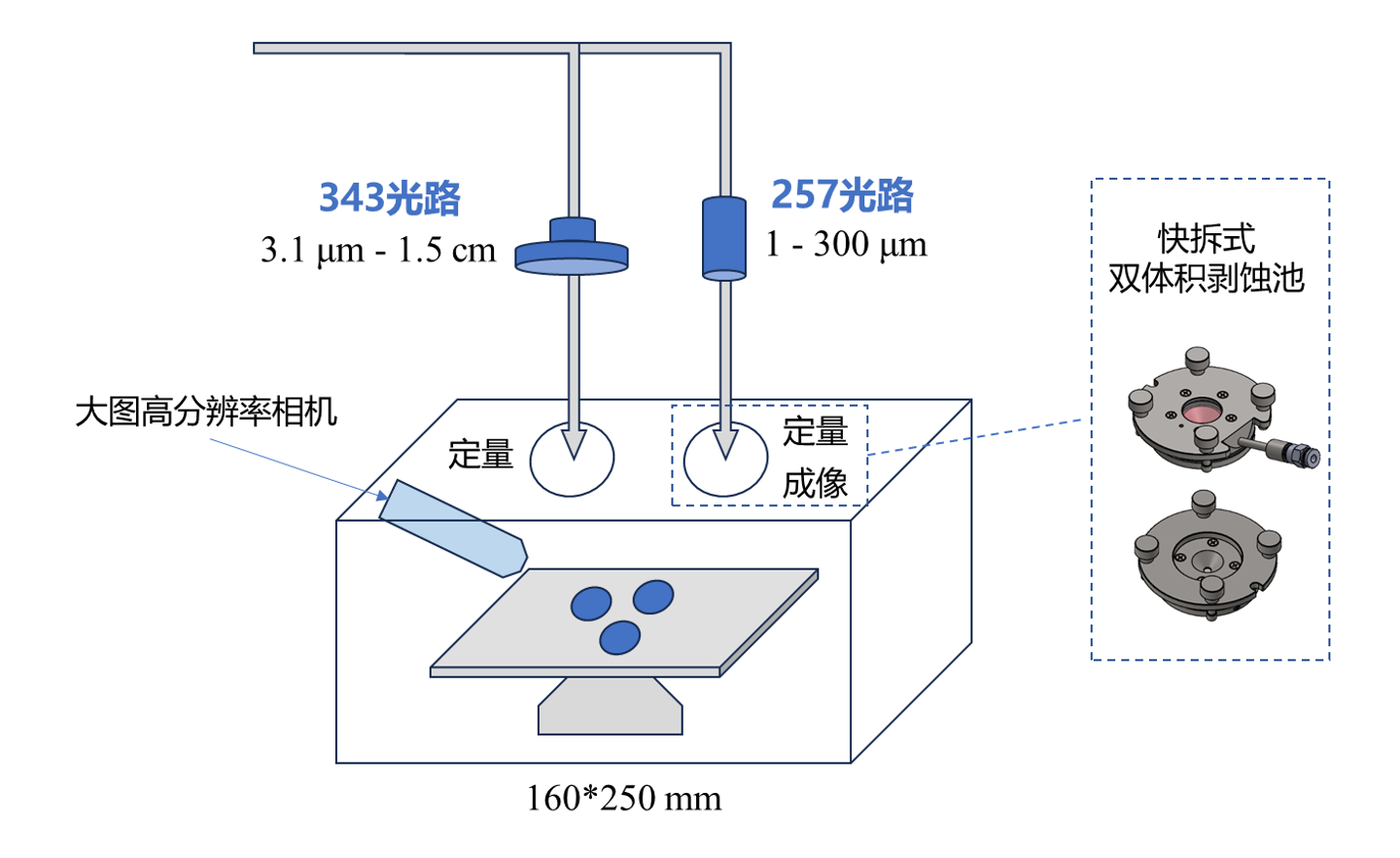
343 Optical Path:Ideal for high-throughput routine sample processing, it supports solid-phase labeling and features a continuously adjustable spot size ranging from a minimum of 3.1 μm to a maximum of 1.5 cm, making it suitable for both high-precision quantitative analysis of micro-areas and homogenization testing of large-volume samples.
257Optical Path:Designed specifically for extreme “cold ablation,” with a continuously adjustable spot size of 1–300 μm (upgradable to 0.5 μm), and equipped with two quick-release ablation chambers:
Analysis Pool:Suitable for high-precision quantitative analysis.
Imaging tank:Suitable for high-resolution imaging scans over large areas.
Independent optimization design for dual-light paths — Each optical path is individually optimized to adapt flexibly to a wide range of analytical scenarios.
High-throughput large-volume reactor — 160 × 250 mm sample chamber, supporting efficient batch testing of samples and significantly increasing experimental throughput.
Intelligent Operation and Wide-Field-of-View Visual Recognition — “One-touch” multi-function switching design, equipped with a high-resolution vision recognition system, enabling precise positioning and intelligent navigation.
GenesisGEO Pro, with its optimal wavelength and pulse width, embodies the ultimate in scientific research and sets a new standard for femtosecond laser ablation at leading research institutions.
相关资料
Copyright 2024 Shanghai CHEMLAB Instrument Co., Ltd. All Rights Reserved
Shanghai ICP Filing No.65656565
 Contact us