

 News Center
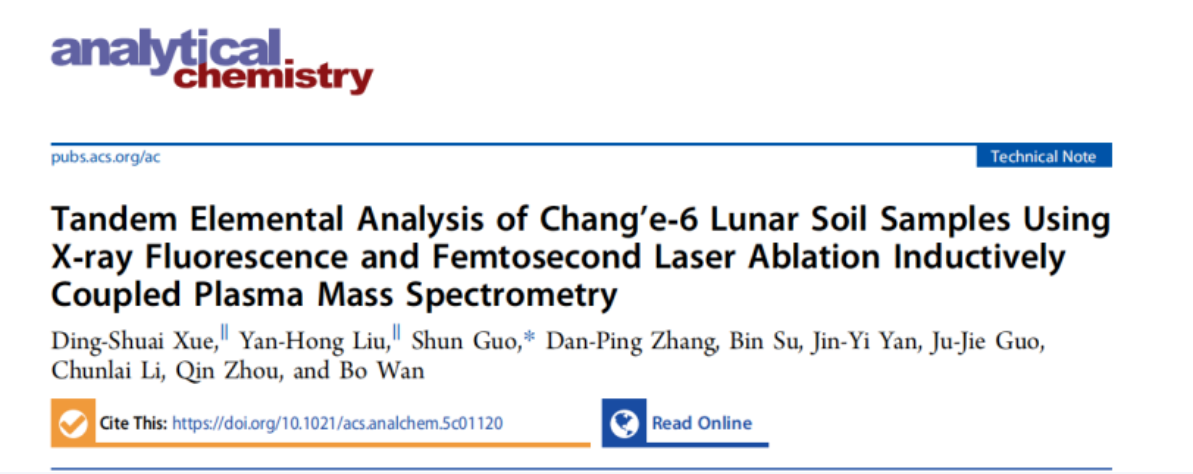
Recently, a research team from the State Key Laboratory of Lithospheric Evolution and Environmental Change, Institute of Geology and Geophysics, Chinese Academy of Sciences (Senior Engineers Dingshuai Xue and Yanhong Liu are co-first authors), in collaboration with the National Astronomical Observatories, Chinese Academy of Sciences, published a new study on Chang’E-6 lunar far-side soil samples in Analytical Chemistry. The study employed a combined technique of X-ray fluorescence spectrometry (XRF) and used Genesis GEO matrix array femtosecond laser ablation inductively coupled plasma mass spectrometry (fsLA-ICP-MS) to precisely quantify major, minor, and trace elements in Chang’E-6 lunar soil samples. This coupled technique provides valuable guidance for research in related fields and is expected to be applied to the analysis of future asteroid and Mars sample return materials.
Abstract
In June 2024, the Chang’E-6 (CE-6) lunar mission successfully collected and returned the first batch of lunar soil samples from the lunar far-side. In this study, a combined technique of X-ray fluorescence spectrometry (XRF) and matrix array femtosecond laser ablation inductively coupled plasma mass spectrometry (fsLA-ICP-MS) was used to analyze 10 major elements, one minor element, and 31 trace elements in two CE-6 lunar soil samples.
Only 30 mg of CE-6 lunar soil sample was fused with lithium borate flux (flux-to-sample ratio 100:1) to prepare a highly diluted glass disk. Major element analysis was conducted using XRF, utilizing an enhanced lithium borate glass disk preparation method that successfully eliminates bromine (Br) interference in manganese (Mn) quantification without needing a release agent.
To tackle the difficulties of ICP-MS trace element analysis in glass disks with high dilution ratios, the authors used matrix-array femtosecond laser ablation combined with ICP-MS (fsLA-ICP-MS) and performed large-area line scanning across the sample to boost the amount of material collected. This effectively solves the problem of reduced precision and accuracy of ICP-MS measurements caused by low concentrations after high-fold dilution.
This combined elemental analysis method measures major and trace elements from a single sample. The preparation procedure is fast and simple, effectively handles refractory phases, significantly reduces consumption of precious samples, and improves sample preparation efficiency.
1. Research Highlights
•A combined technique of X-ray fluorescence spectrometry (XRF) and matrix-array femtosecond laser ablation inductively coupled plasma mass spectrometry (fsLA-ICP-MS) is proposed for the analysis of major and trace elements in small-volume and precious samples.
•For XRF analysis, the 30-mg-sample XRF technique eliminates the use of release agents during glass disk preparation, avoiding interference from bromine (NH4Br) on manganese determination without a mold-release agent.
•Trace elements in lithium borate glass disks were analyzed using the Genesis GEO matrix-array fsLA-ICP-MS with continuous line scanning and an extra-large 300 μm beam spot.
•Owing to its high peak energy, the Genesis GEO matrix-array femtosecond laser delivers excellent ablation performance on highly transparent lithium borate disks. The ablation process shows no obvious thermal melting effects, produces relatively flat-bottomed craters, and is less affected by elemental fractionation or matrix effects.
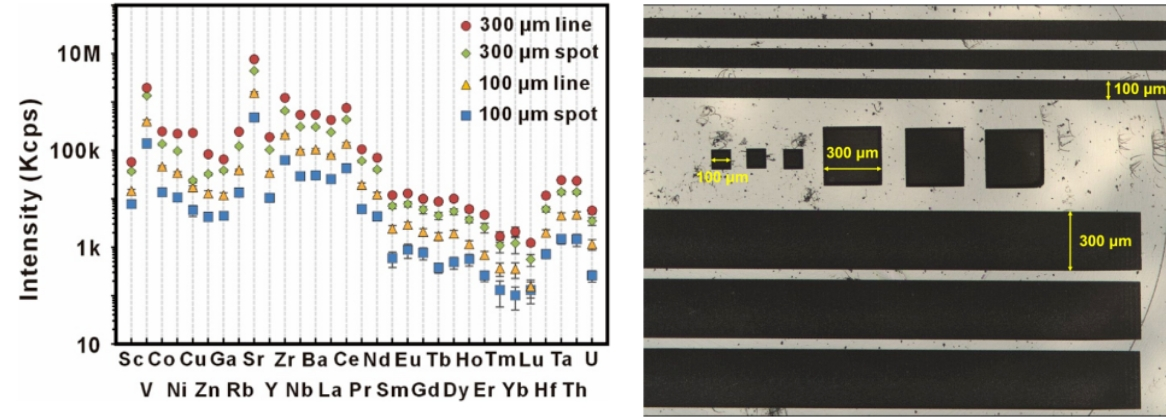
Figure 1: Signal intensity comparison using different beam spot sizes and ablation modes (left) and photographs of ablation craters (right).
Data obtained by the Genesis GEO fsLA-ICP-MS method were validated against the International Geoscience Programme (IGCP) standards. The ΔlogC values for major and trace elements were less than ±0.05 and ±0.15, respectively, meeting strict standard requirements. This demonstrates that the proposed method exhibits extremely high accuracy and reliability.
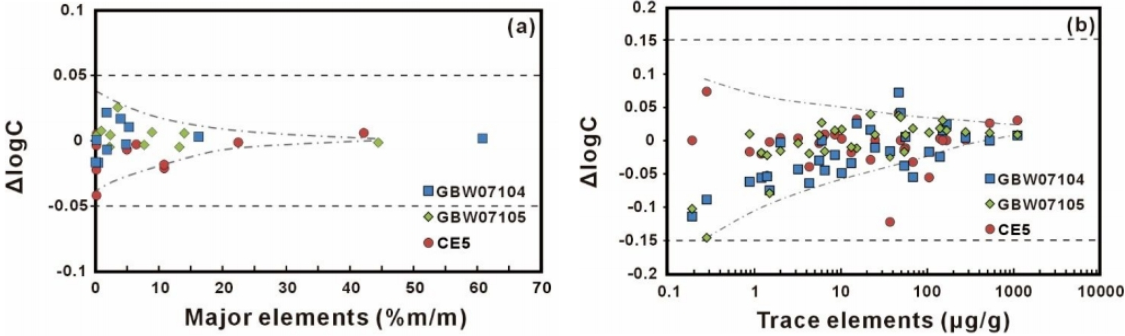
Figure 2: Reliability validation of major and trace element determinations.
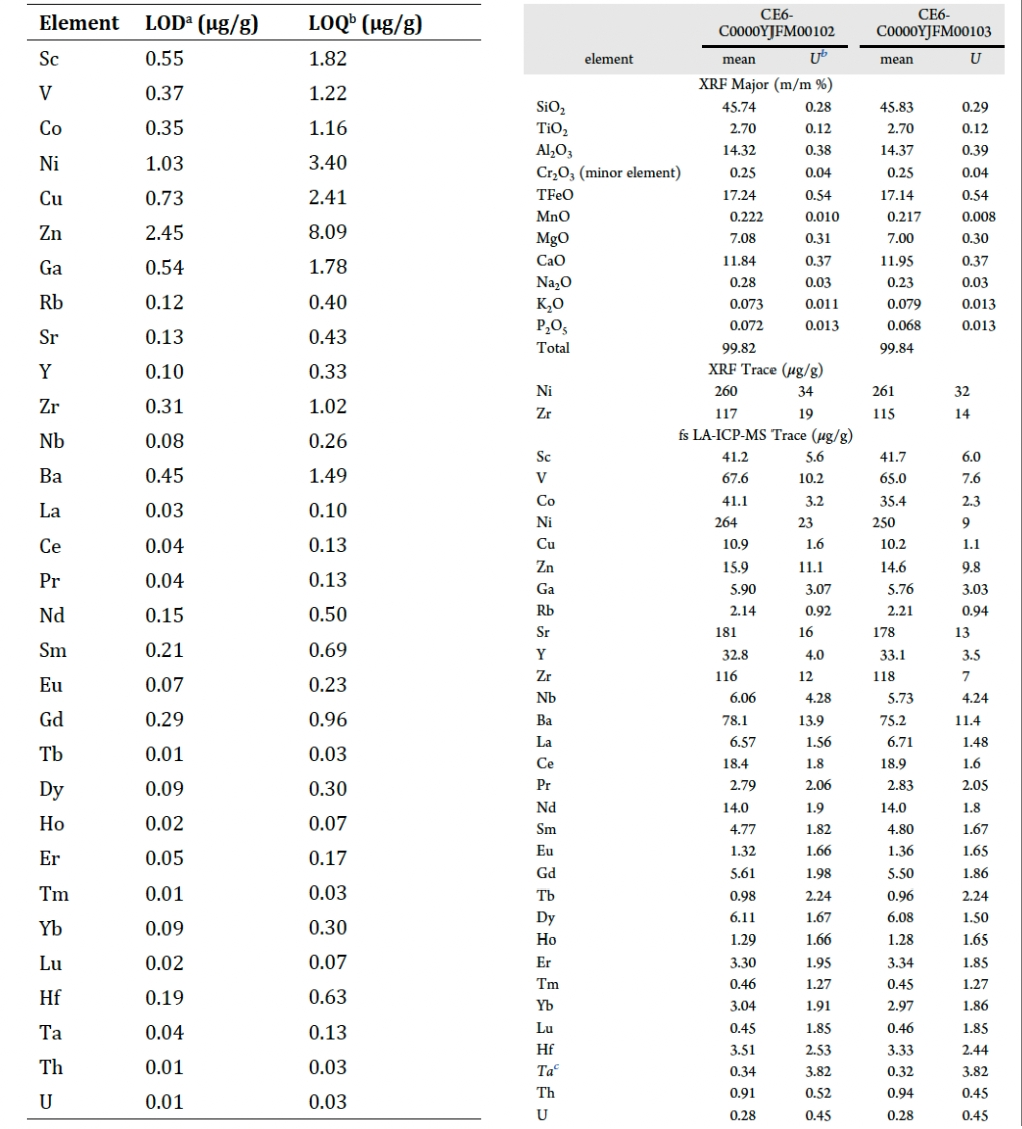
Table 1: (Left) LODs and LOQs for the fs-LA-ICP-MS method
Table 2: (Right) Elemental composition characteristics of CE-6 lunar far-side samples
2. Conclusions
The coupled technique of X-ray fluorescence spectrometry (XRF) and matrix-array femtosecond laser ablation inductively coupled plasma mass spectrometry (fsLA-ICP-MS) was used to analyze major, minor, and trace elements in CE-6 lunar soil samples. Samples were fused into glass disks using lithium borate flux (67% Li2B4O7;33%LiBO2; sample/flux = 1:100).
The lithium borate fusion sample preparation method offers the advantages of simplicity, efficiency, reliability, and compatibility with multiple analytical methods, making it the preferred sample preparation method in many laboratories. The fused disks produce homogeneous solid samples, ensure complete decomposition of acid-resistant minerals, and dissolve high-field-strength elements (Ta, Hf, Nb, Zr). This sample preparation method facilitates subsequent precise quantitative elemental analysis by fsLA-ICP-MS.
This technique provides valuable guidance for research in related fields and is expected to be applied to the analysis of future asteroid and Mars sample-return materials.
3. More About Genesis GEO Matrix-Array Femtosecond Laser Ablation System and Chang’E-6 Related Articles
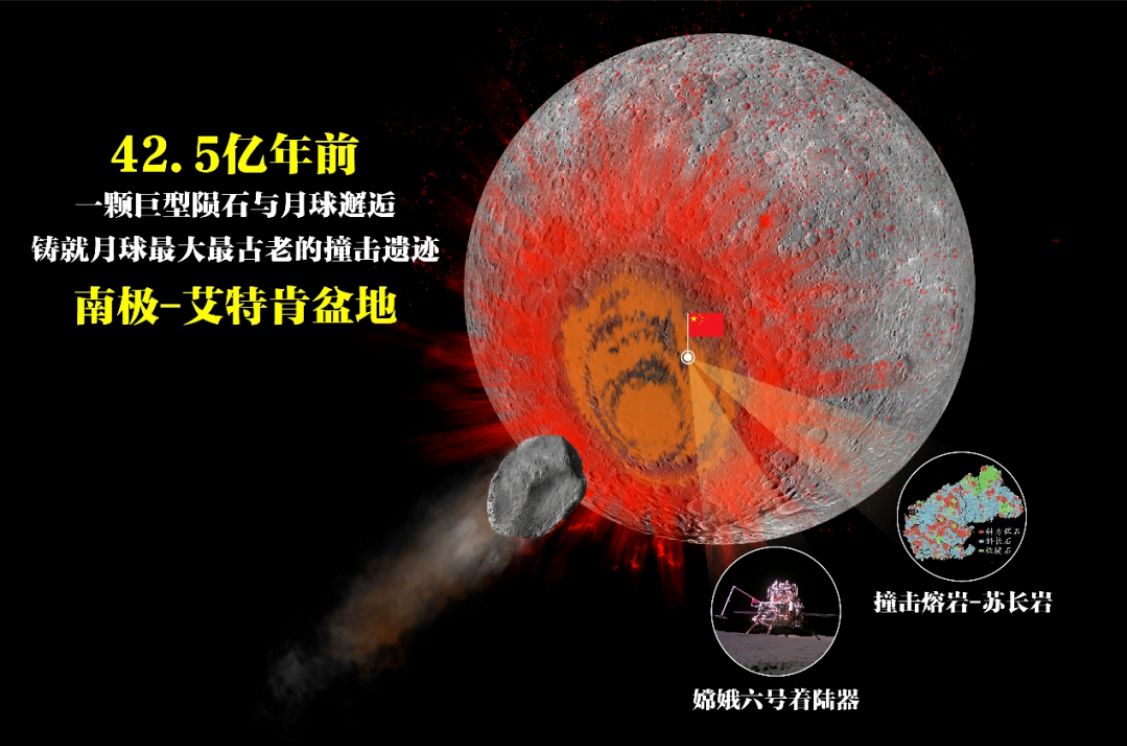
Highlighted Article
“2025 Chang’e-6 samples: South Pole-Aitken massive impact 4.25 billion years ago revealed by Chang’e-6 samples”
https://academic.oup.com/nsr/article/12/6/nwaf103/8088430?login=false
Highlighted Article
“CE-6: Nature of the lunar far-side samples returned by the Chang’E-6 mission”
https://academic.oup.com/nsr/article/11/11/nwae328/7758366?searchresult=1
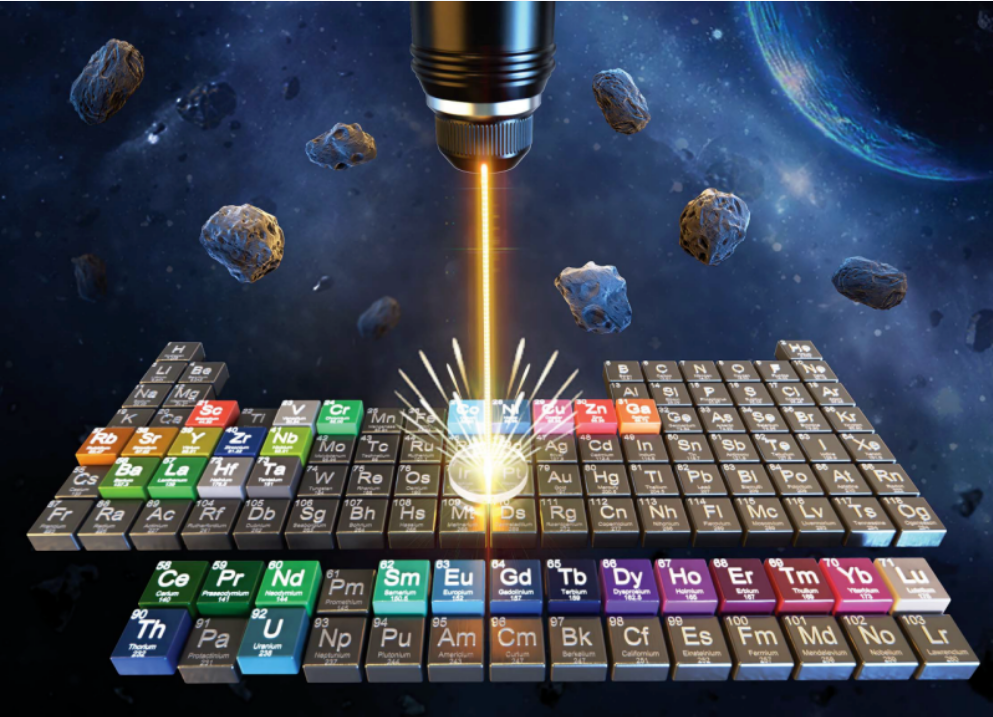
Highlighted Article
JAAS back cover: “Trace element determination by femtosecond LA-ICP-MS in 10 mg extraterrestrial geological samples prepared as lithium borate glasses”
https://pubs.rsc.org/ba/content/articlelanding/2024/ja/d4ja00275j
Copyright 2024 Shanghai CHEMLAB Instrument Co., Ltd. All Rights Reserved
Shanghai ICP Filing No.65656565