

 News Center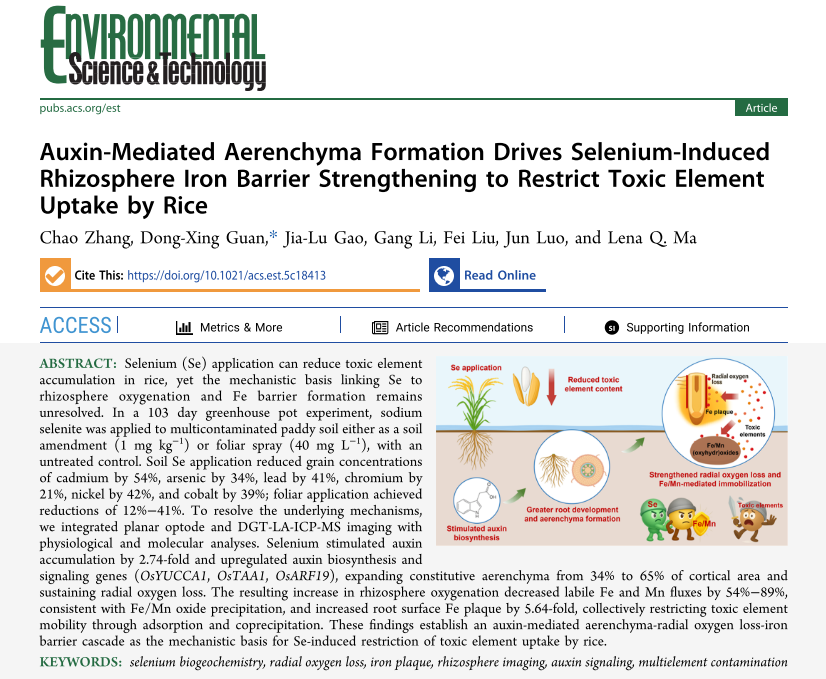
Introduction
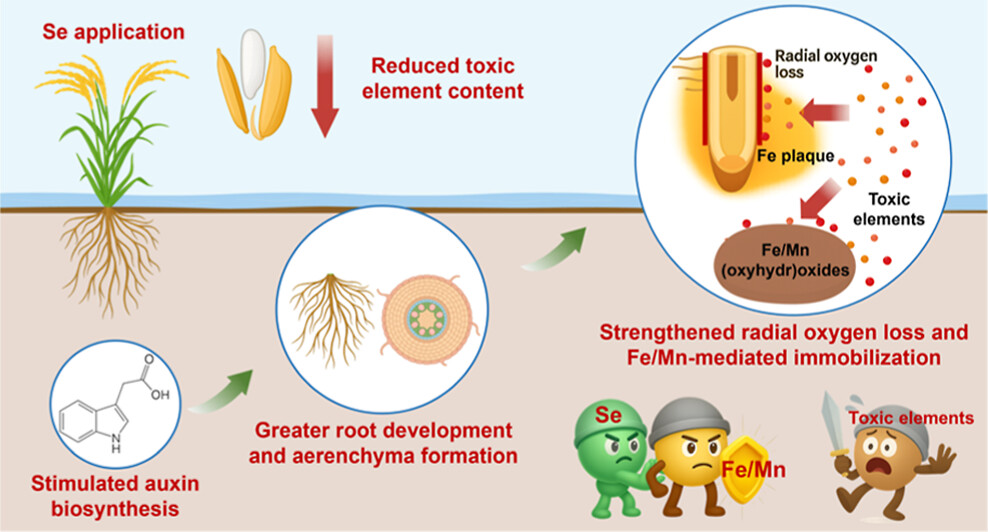
A team led by Professors Guan Dongxing and Zhang Chao from Zhejiang University has published a landmark study in Environmental Science & Technology, a premier journal in the environmental sciences. The study systematically elucidates the complete cascade mechanism by which exogenous selenium (Se) regulates the auxin signaling pathway within rice roots, promotes constitutive aerenchyma development, enhances radial oxygen loss (ROL), and consequently builds a Fe/Mn oxide chemical barrier on root surfaces and in the rhizosphere. This barrier achieves synchronized immobilization of multiple toxic elements, including cadmium (Cd), arsenic (As), lead (Pb), chromium (Cr), nickel (Ni), and cobalt (Co). The research employed an integrated platform combining Planar Optode (PO), Diffusive Gradients in Thin-films (DGT), femtosecond laser ablation (fs-LA), and inductively coupled plasma time-of-flight mass spectrometry (ICP-TOF-MS) to achieve simultaneous two-dimensional mapping of rhizosphere dissolved oxygen distribution and fluxes of multiple elements (Fe, Mn, Cd, As, Pb, Cr, Ni, Co) at a spatial resolution of approximately 100 μm. This approach provides critical evidence for the cross-scale linkage between hormone regulation, root anatomical structure, and rhizosphere geochemical processes, while demonstrating the significant advantages of high-resolution in situ imaging techniques in resolving rhizosphere spatial heterogeneity.
研究背景
Approximately 14–17% of global agricultural land is contaminated with toxic elements. Rice (Oryza sativa L.), due to its anaerobic cultivation characteristics, is highly prone to accumulating contaminants such as Cd, As, Pb, Cr, Ni, and Co. Conventional remediation faces a significant geochemical trade-off: under oxidizing conditions, cationic metals (Cd²⁺, Pb²⁺, etc.) decrease in mobility, while anionic pollutants (AsO₄³⁻, CrO₄²⁻, etc.) increase in mobility—an antagonistic behavior that makes simultaneous reduction difficult.
The iron plaque on rice roots and Fe/Mn oxide precipitates in the rhizosphere can immobilize multiple pollutants through adsorption and co-precipitation. Their formation depends on the micro-oxidizing rhizosphere environment induced by ROL. However, how selenium (Se) regulates the upstream hormonal signals of aerenchyma development, thereby driving ROL enhancement and iron barrier strengthening, has until now lacked complete experimental evidence linking molecular physiology to in situ rhizosphere processes.
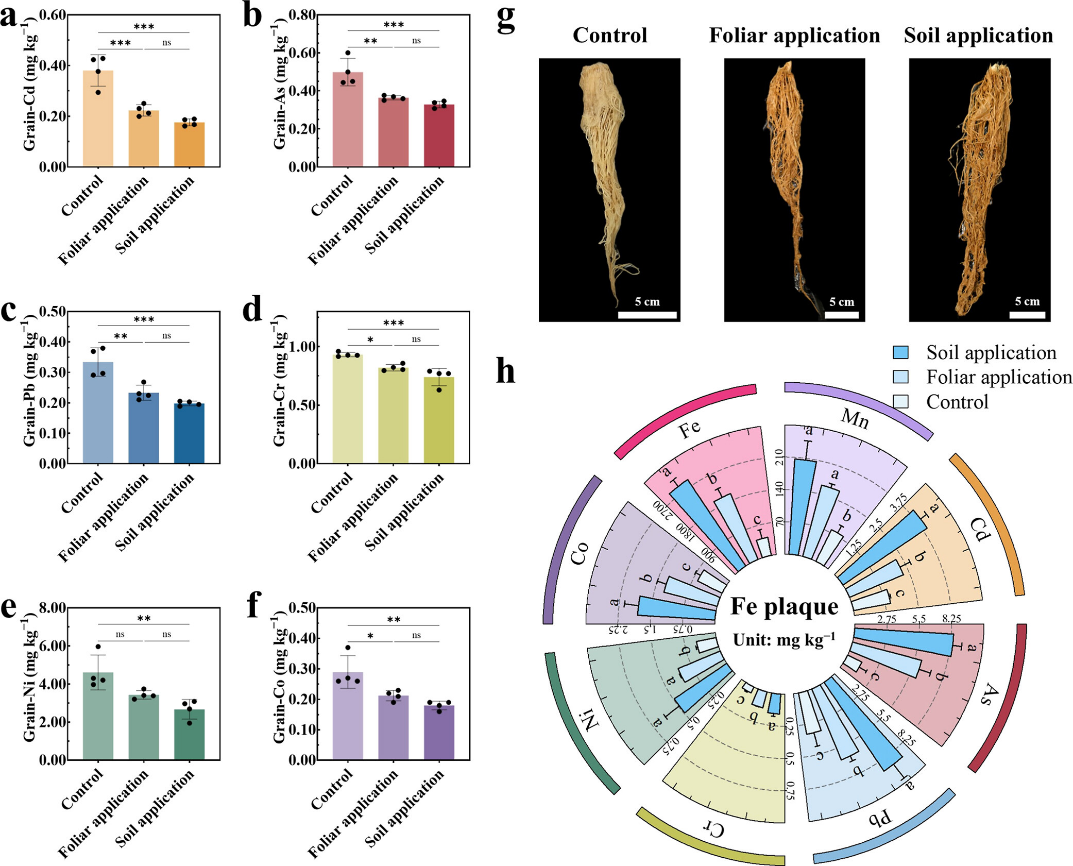
Figure 1. Broad-spectrum toxicity reduction and iron plaque enhancement effects of selenium.(a-f) Statistical analysis of six toxic element concentrations in rice grains from pot experiments; (g) Representative photographs of root iron plaque; (h) Ring chart of elemental composition of iron plaque.
Research Highlights------ PO–DGT–fs-LA–ICP-TOF-MS Integrated Platform
The methodological core of this study lies in the construction of a high-resolution PO–DGT–fs-LA–ICP-TOF-MS integrated platform, enabling simultaneous, in situ, micro-scale visualization of rhizosphere redox status and elemental fluxes:
·Planar Optode (PO): Based on fluorescence quenching principles, this technique maps the two-dimensional distribution of dissolved oxygen in the rhizosphere in situ.
·Diffusive Gradients in Thin-films (DGT): A non-invasive method that enriches soluble element fluxes from the rhizosphere while preserving in situ chemical gradients.
·Femtosecond Laser Ablation (fs-LA): An ultra-short pulse femtosecond laser performs area scanning on DGT gels to achieve spatial distribution imaging of multiple elements.
·ICP-TOF-MS: Simultaneously collects isotopic signals for ¹³C (internal standard), ⁵⁷Fe, ⁵⁵Mn, ¹¹¹Cd, ²⁰⁸Pb, ⁵²Cr, ⁶⁰Ni, ⁵⁹Co and ⁷⁵As, enabling two-dimensional quantitative reconstruction of multi-element fluxes.
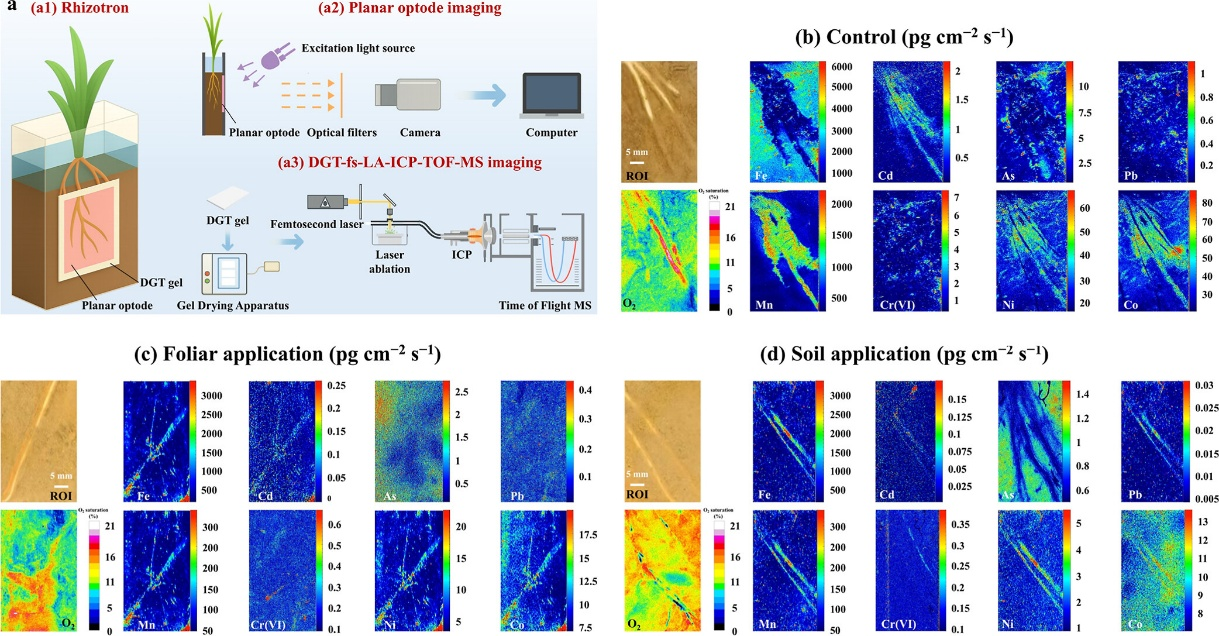
Figure 2. High-resolution in situ imaging reveals selenium-induced rhizosphere oxidation and immobilization of toxic elements.(a) Workflow of the PO–DGT–fs-LA–ICP-TOF-MS integrated platform; (b-d) Spatial distribution maps of rhizosphere O₂ and DGT fluxes of Fe, Mn, Cd, As, Pb, Cr, Ni, and Co for three treatment groups: control, foliar Se application, and soil Se application.
Compared to the inherent limitations of conventional bulk analytical methods in resolving rhizosphere processes, this integrated platform enables rapid imaging at the centimeter-scale sample size, achieving simultaneous two-dimensional mapping of rhizosphere O₂ distribution and multi-element fluxes. It directly demonstrates that after Se treatment, the rhizosphere O₂ diffusion area expanded from 27.2% to 88.3%, while high-flux "hotspots" of elements such as Cd, Ni, and Co were significantly attenuated, providing direct spatial evidence for Se-induced strengthening of the rhizosphere oxidation barrier.
Technical Methods:
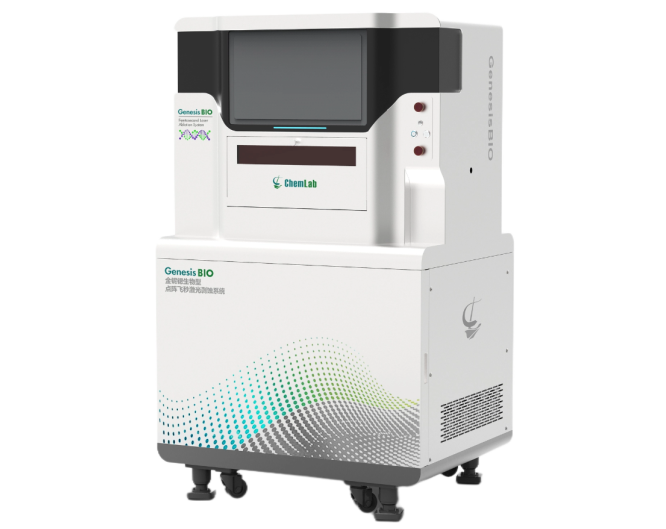
The elemental imaging component of this study relied on the GenesisBIO fsLA-ICP-MS system (Shanghai Chemlab Instrument Co., Ltd.), utilizing the independently developed and manufactured GenesisBIO dot-matrix femtosecond laser ablation system coupled with mass spectrometry to achieve high-throughput simultaneous acquisition and two-dimensional reconstruction of multi-isotope signals from DGT gels. The integrated GenesisBIO–PO–DGT–ICP-TOF-MS system provides reliable technical support for visualizing spatiotemporal heterogeneity of multiple elements in complex environmental samples, and demonstrates the application potential of domestically manufactured femtosecond laser elemental imaging platforms in environmental and agricultural research.
Research Findings
1. Synchronized Multi-element Immobilization in Grains
Soil Se application (1 mg Se/kg soil, Na₂SeO₃) reduced grain Cd, As, and Pb by 53.7%, 34.1%, and 40.7%, respectively, while Cr, Ni, and Co decreased by 20.6%, 42.0%, and 38.6%. Foliar Se application (40 mg/L, three sprays) also showed a synchronized reduction trend. Grain Cd, As, and Pb in the control group all exceeded the GB 2762-2022 limits, but after Se application, all fell below the standards.
2. Strengthening of the Rhizosphere Fe/Mn Barrier
Root iron plaque Fe content increased by 5.64-fold and Mn by 2.70-fold, consistent with Fe–Mn co-precipitation characteristics. As retention in the iron plaque increased by 526%, while Cd, Pb, Cr, Ni, and Co retention increased by 154–217%. DGT fluxes showed that rhizosphere soluble Fe and Mn fluxes decreased by 54–89% and 41.6–74.1%, respectively, while the diffusible fluxes of the six toxic elements decreased by 18.3–93.0%.
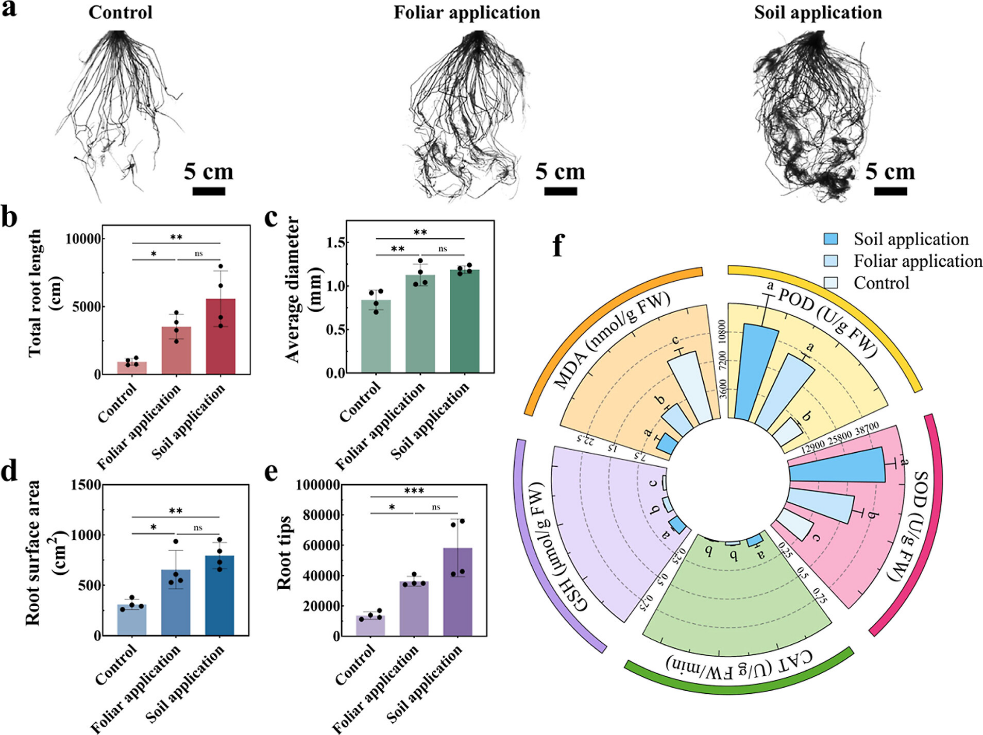
Figure 3. Effects of selenium on root system development and antioxidant systems.
(a) Root scanning morphology for three treatment groups: control, foliar Se, and soil Se; (b-e) Statistical analysis of total root length, average diameter, surface area, and root tip number; (f) Radar chart of antioxidant enzyme activities and MDA content.
3. Auxin-Mediated Constitutive Aerenchyma Development
Targeted metabolomics and qRT-PCR revealed the upstream hormonal switch:
·Free IAA content in roots increased by 2.74-fold.
·Auxin biosynthesis genes OsYUCCA1 and OsTAA1 were upregulated 2.62-fold and 2.85-fold, respectively; signaling gene OsARF19 was upregulated 3.43-fold.
·The downstream aerenchyma development gene OsLBD1-8 was upregulated 4.08-fold.
The proportion of root cortical aerenchyma area increased from 33.7% to 65.3%. TUNEL assays showed that the programmed cell death rate remained at a low level (1.79–2.08%). The ethylene precursor ACC decreased by 24.6%, and biosynthesis genes OsACS1 and OsACO5 were downregulated by 45.3–73.1%, clearly ruling out the dominant role of ethylene-induced PCD pathways and confirming that Se promotes aerenchyma development through the constitutive auxin signaling pathway.
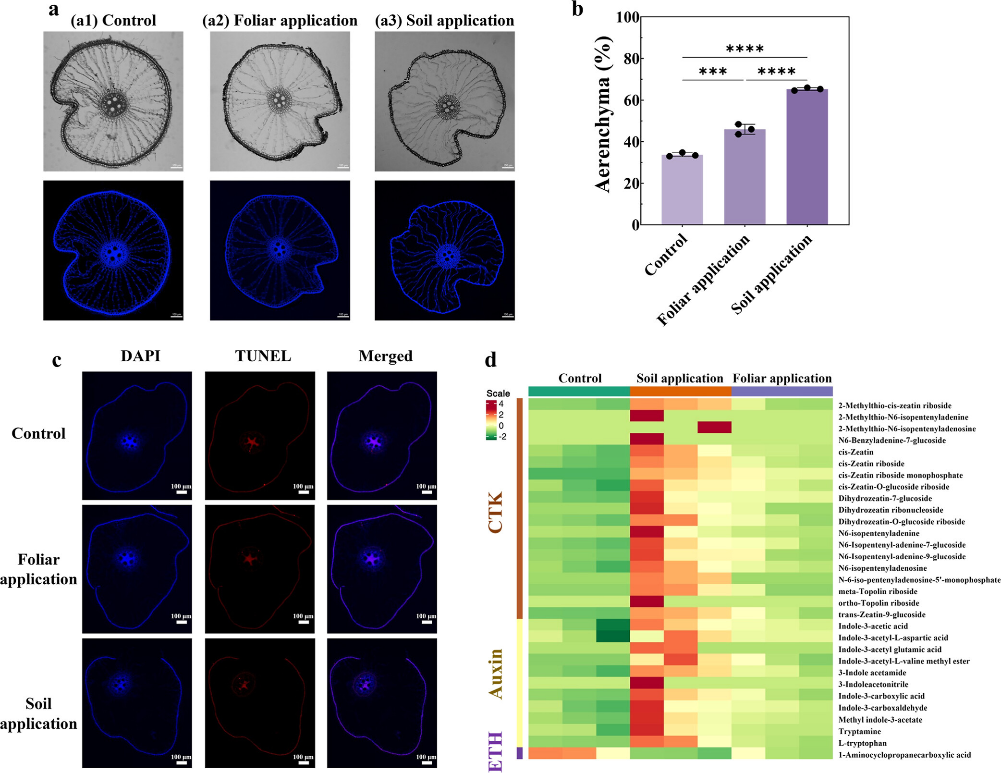
Figure 4. Aerenchyma expansion and hormonal profile changes.
(a) Bright-field and autofluorescence images of root cross-sections; (b) Statistical analysis of aerenchyma proportion; (c) TUNEL staining images; (d) Heatmap of hormone metabolites.
4. ROL Enhancement and Rhizosphere Oxidation
Aerenchyma expansion directly enhanced the longitudinal diffusion of O₂ from the shoot to the root tip. Enhanced ROL increased the average rhizosphere O₂ concentration from 8.80% to 15.1%, while the O₂ diffusion area expanded from 27.2% to 88.3%. Reduced sulfur S(-II) fluxes decreased by 44.7%, corroborating the rise in rhizosphere Eh. After Fe²⁺/Mn²⁺ were oxidized to (hydr)oxides, continuous Fe/Mn enrichment zones formed from the root surface to the rhizosphere soil, immobilizing multiple pollutants through adsorption and co-precipitation, thereby reducing the concentration gradient driving force toward the root system.
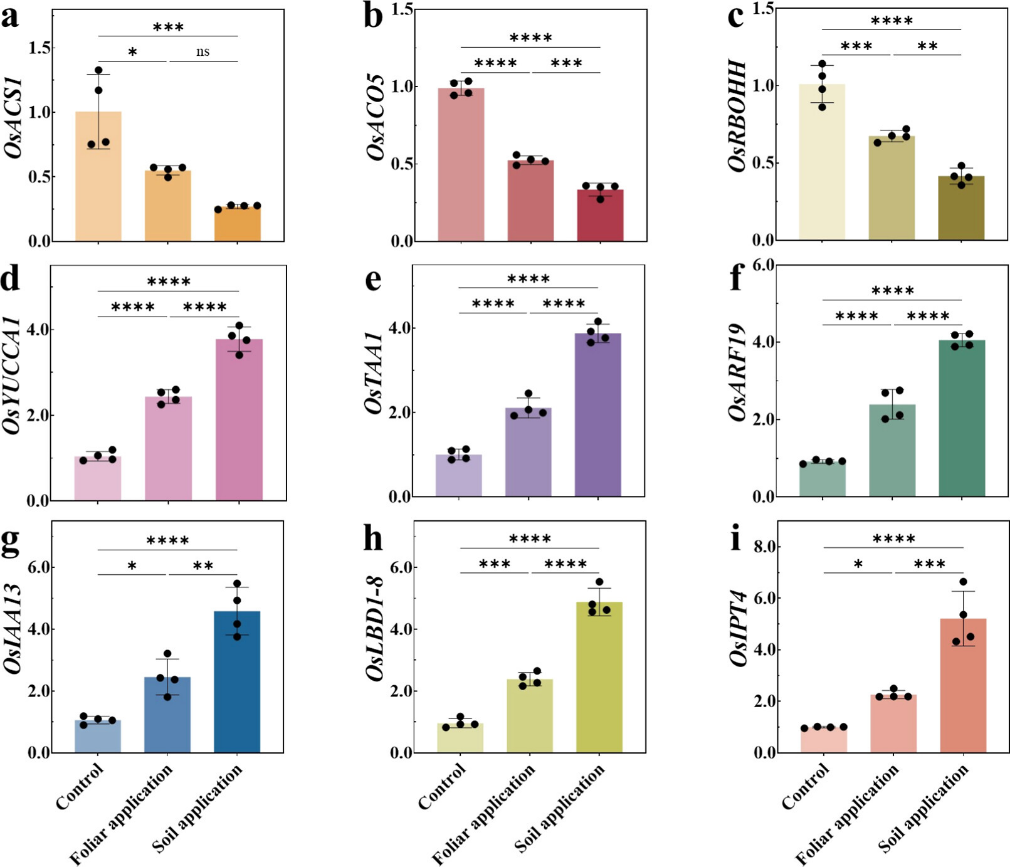
Figure 5. Activation of the auxin pathway and suppression of the ethylene pathway.
Relative expression levels of ethylene biosynthesis genes (OsACS1, OsACO5), ROS signaling genes (OsRBOHH), auxin biosynthesis and signaling genes (OsYUCCA1, OsTAA1, OsARF19, OsIAA13, OsLBD1-8), and cytokinin biosynthesis genes (OsIPT4).
结语
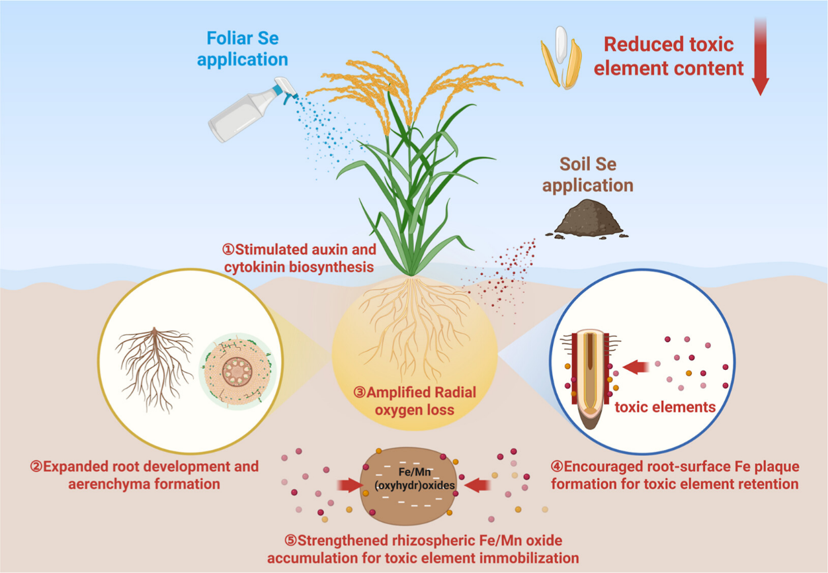
Figure 6. Complete mechanistic diagram of selenium-induced toxic element immobilization.
Illustrating the cascade pathway: “Se → auxin biosynthesis → aerenchyma → ROL → rhizosphere oxidation → Fe/Mn oxide precipitation → toxic element immobilization.”
This study systematically constructs a mechanistic framework of "Se–auxin–aerenchyma–ROL–Fe/Mn barrier," linking plant hormonal regulation with rhizosphere geochemical barrier formation, and providing new physiological regulatory strategies for the safe production of multi-element co-contaminated paddy fields.
At the methodological level, this study further demonstrates the significant value of high-resolution in situ imaging techniques in resolving rhizosphere biogeochemical heterogeneity. The PO–DGT–fs-LA–ICP-TOF-MS integrated platform, through multi-technique coupling, simultaneously resolves redox status and elemental fluxes in spatial dimensions, overcoming the inherent limitations of conventional bulk extraction methods.
The application of the GenesisBIO dot-matrix femtosecond laser ablation system in this study demonstrates that domestically manufactured high-resolution elemental imaging platforms can already meet the research demands of in situ analysis and simultaneous multi-element imaging of complex environmental samples. Leveraging femtosecond laser ablation coupled with high-throughput mass spectrometry, the platform holds broad application prospects in environmental science, agricultural ecology, biogeochemistry, and other fields, providing a new technical option for studying micro-scale elemental transport processes.
Article Information:Zhang C, Guan D X, Gao J L, Li G, Liu F, Luo J, Ma L Q. Auxin-Mediated Aerenchyma Formation Drives Selenium-Induced Rhizosphere Iron Barrier Strengthening to Restrict Toxic Element Uptake by Rice. Environ. Sci. Technol. 2026, DOI: 10.1021/acs.est.5c18413.
Copyright 2024 Shanghai CHEMLAB Instrument Co., Ltd. All Rights Reserved
Shanghai ICP Filing No.65656565