

 News Center
Rare Earth Elements
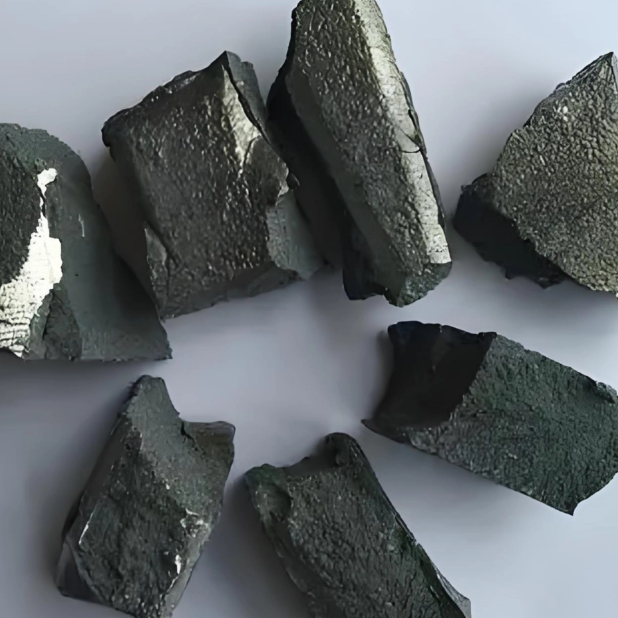
Rare earth elements (REEs) are core strategic resources, widely applied across major sectors such as: magnetics, luminescence, energy storage, catalysis, biomedicine, and semiconductor precision manufacturing. Collectively, REEs refer to 17 metallic elements in the periodic table: the 15 lanthanide elements (La→Lu) plus yttrium (Y) and scandium (Sc). By property, they are classified into light REEs (La–Eu) and medium-to-heavy REEs (Gd–Lu, Y, Sc). Owing to their unique 4f electron shell configuration, REEs possess magnetic, optical, electrical, and catalytic properties that cannot be substituted by other elements. Through doping, coordination, and structural modulation, their performance can be customized, penetrating the entire industrial chain of the national economy, defense and military industry, and biomedicine. As the research and development of new rare earth materials and the demand for cutting-edge scientific research continue to increase, conventional detection methods have become increasingly inadequate to address industry challenges such as in-situ micro-area analysis, ultra-high-resolution imaging, and trace-level precise quantification. ChemLab Pro, leveraging the core technology of the GenesisGEO matrix-array femtosecond laser ablation (fsLA) system—fully independently developed and manufactured by Shanghai ChemLab Instrument Co., Ltd.—has expanded into the field of REEs analysis. This technology can be applied across multiple industries, providing domestic instrument solutions for in-situ REEs analysis.
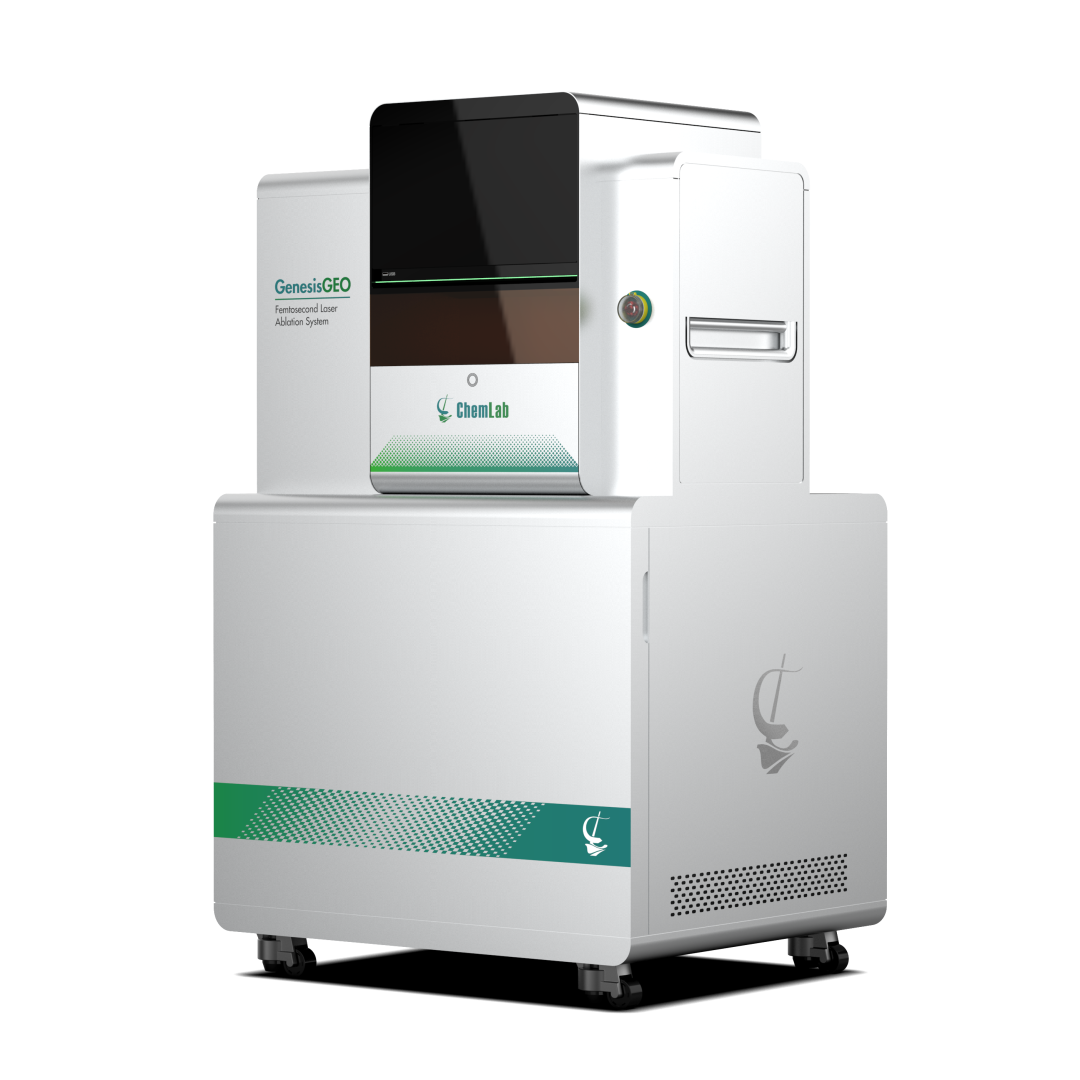
Technical Advantages:
ChemLab Pro adopts the GenesisGEO matrix-array femtosecond laser ablation (fsLA) system, fully independently developed and manufactured by Shanghai ChemLab Instrument Co., Ltd., coupled with inductively coupled plasma mass spectrometry (ICP-MS). Leveraging advantages including low thermal effects, absence of elemental fractionation, ultra-high spatial resolution, and no requirement for complex sample preparation, this has become a cutting-edge technical approach for REEs analysis.
Supported by a comprehensive equipment system and laboratory analytical capabilities, REEs detection can be applied in four major fields: geological minerals, environmental ecology, high-purity materials, and life sciences. It provides systematic REEs analysis solutions, facilitating the practical application of domestic high-end analytical instrument technology.
Geological Domain
Rare earth element mineral exploration, genesis studies, and resource evaluation all rely on precise characterization of micro-area REEs distribution and fractionation patterns in minerals.
ChemLab Pro Genesis domestic matrix-array femtosecond laser ablation system achieves an ultra-high spatial resolution of up to 500 nm, enabling REEs surface scanning and imaging of single minerals, oolites, and carbonates. It accurately acquires micro-area distributions, enrichment patterns of REEs such as La, Ce, Nd, Gd, and Lu, as well as Eu/Ce anomalies. This helps invert the ore-forming fluids and the genesis of mineral deposits.
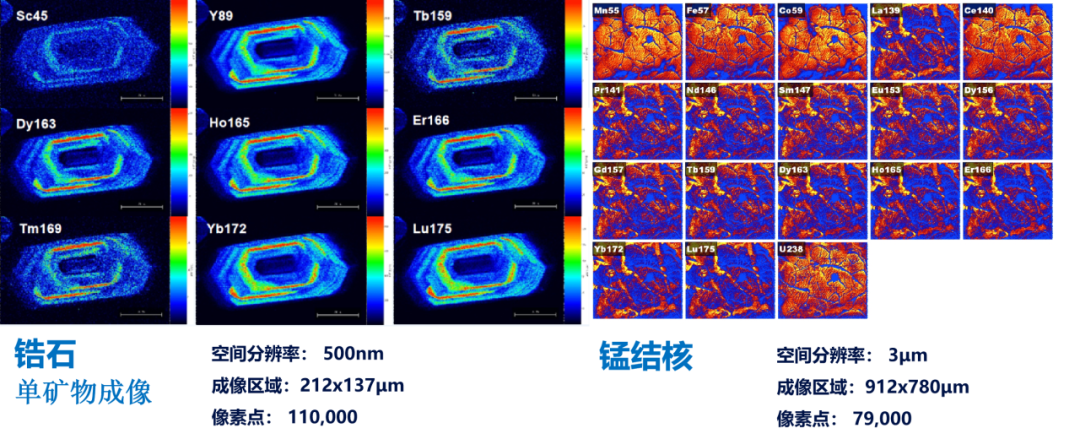
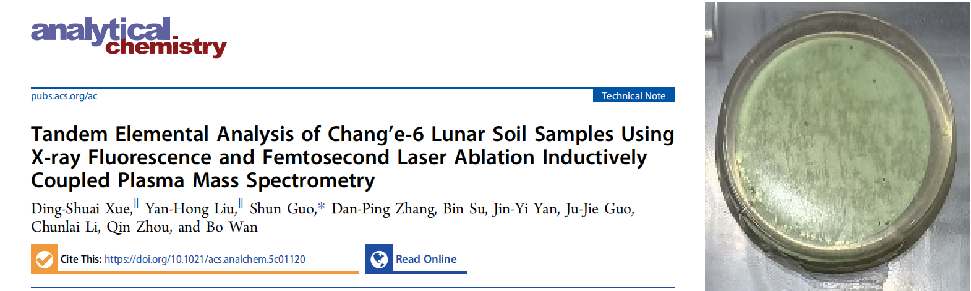
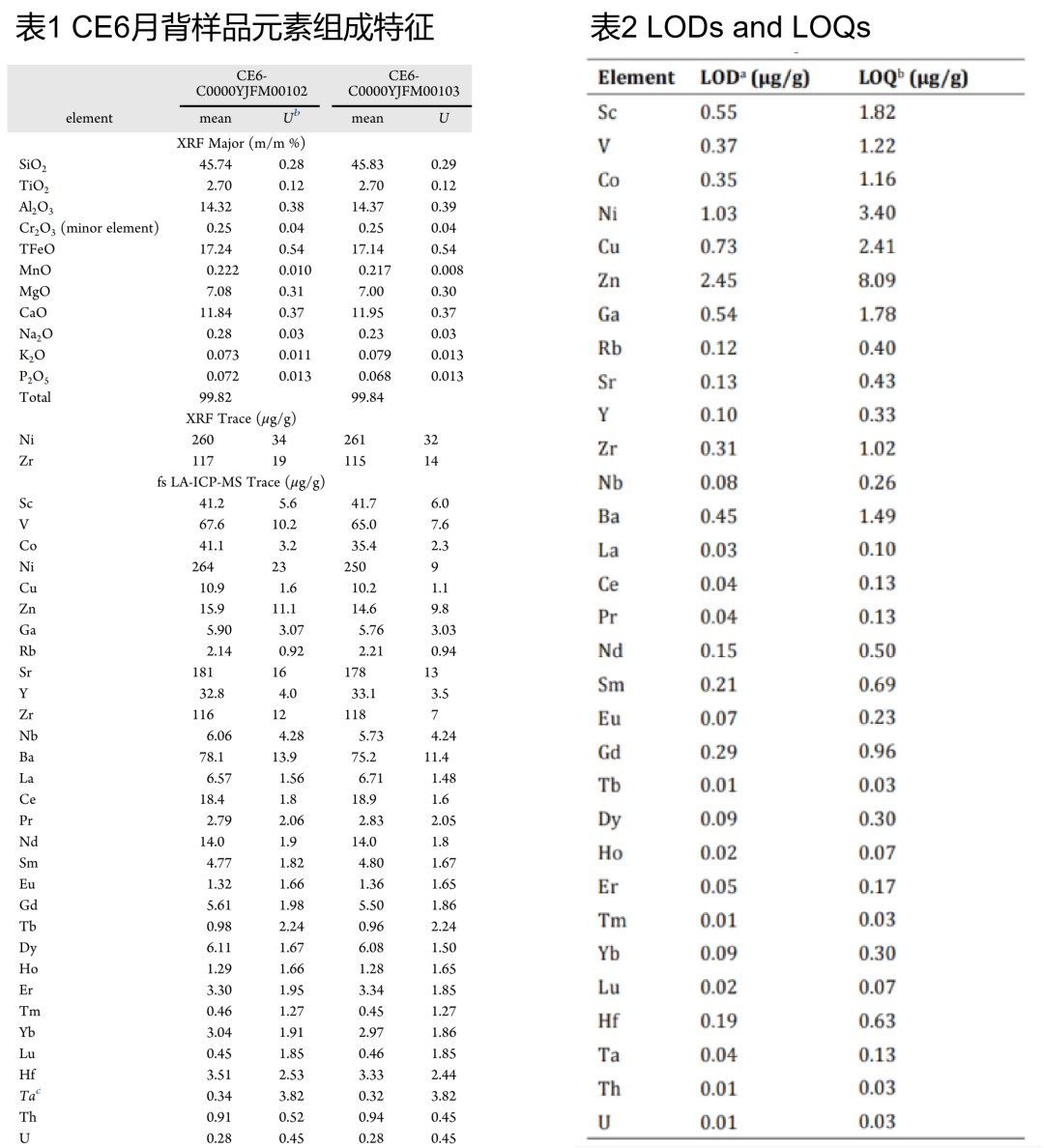
Furthermore, in quantitative experiments for REEs in geological minerals, detection limits for REEs under small spot sizes have approached 1 ppb. In collaboration with the Institute of Geology, Chinese Academy of Sciences, a borate glass fusion bead method was established and successfully applied to the precise determination of REEs and multiple elements in Chang’e-6 lunar soil samples, achieving minimal sample loss with stable and reliable data.
Environmental Field
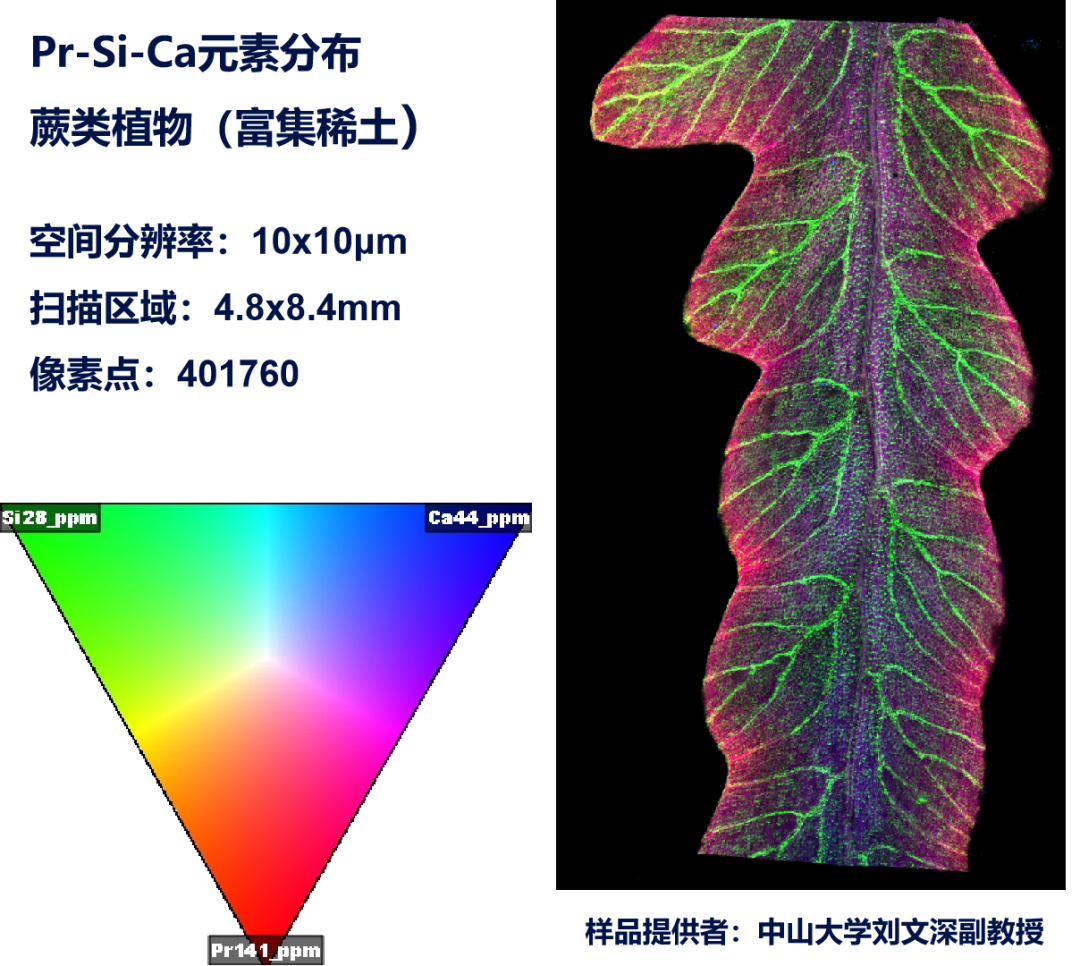
In the field of environmental science, research on the migration and enrichment patterns of REEs is of great scientific research and application value. Leveraging the ChemLab Pro domestic Genesis matrix-array femtosecond laser ablation system, three-color (Pr–Si–Ca) imaging of REEs-enriched ferns can be realized. The imaging results clearly demonstrate the enrichment patterns and spatial distribution characteristics of Pr within the plant, not only corroborating the absorption and enrichment efficiency of such plants for REEs but also confirming their dual application value in both mining area environmental remediation and REEs resource phytomining.
Materials Field
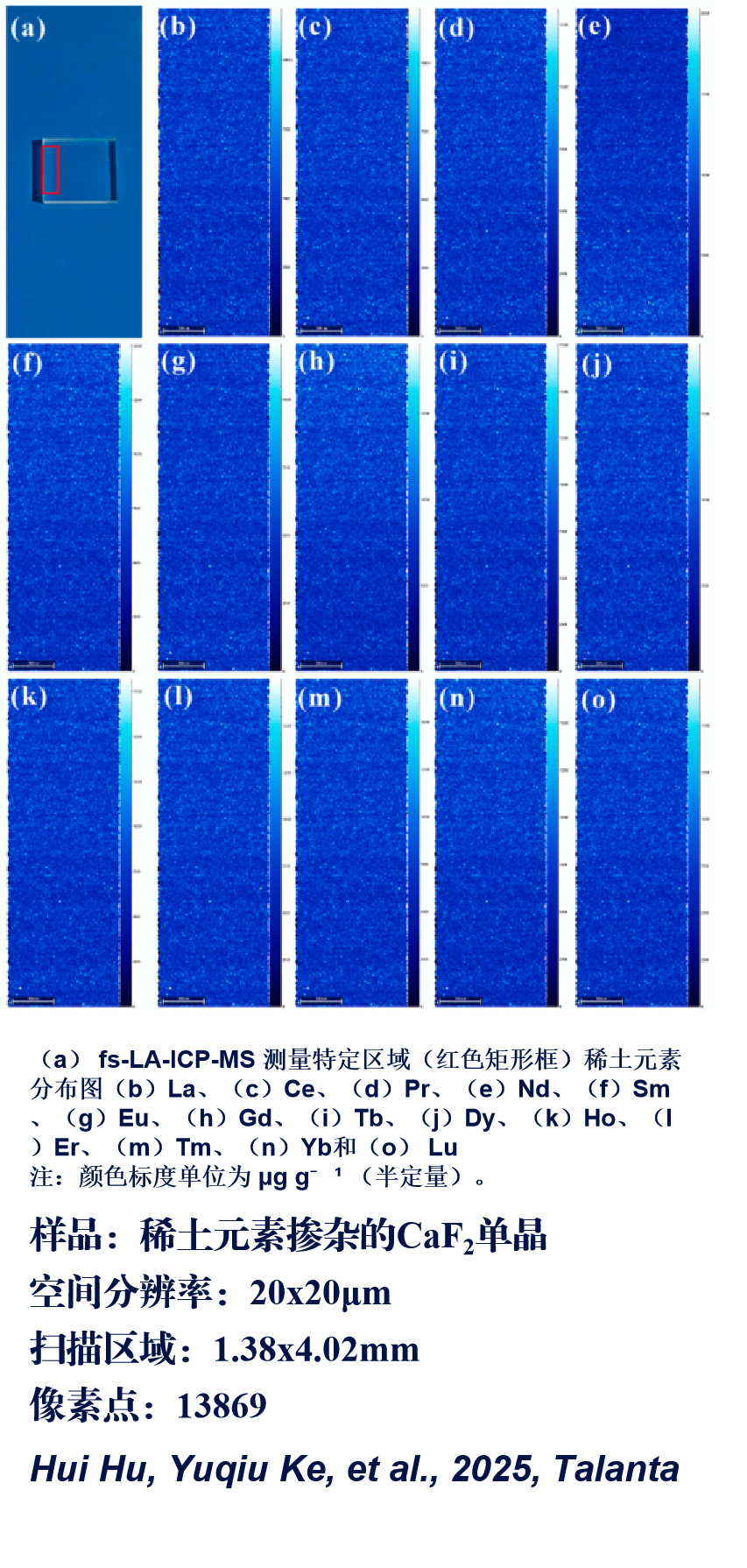
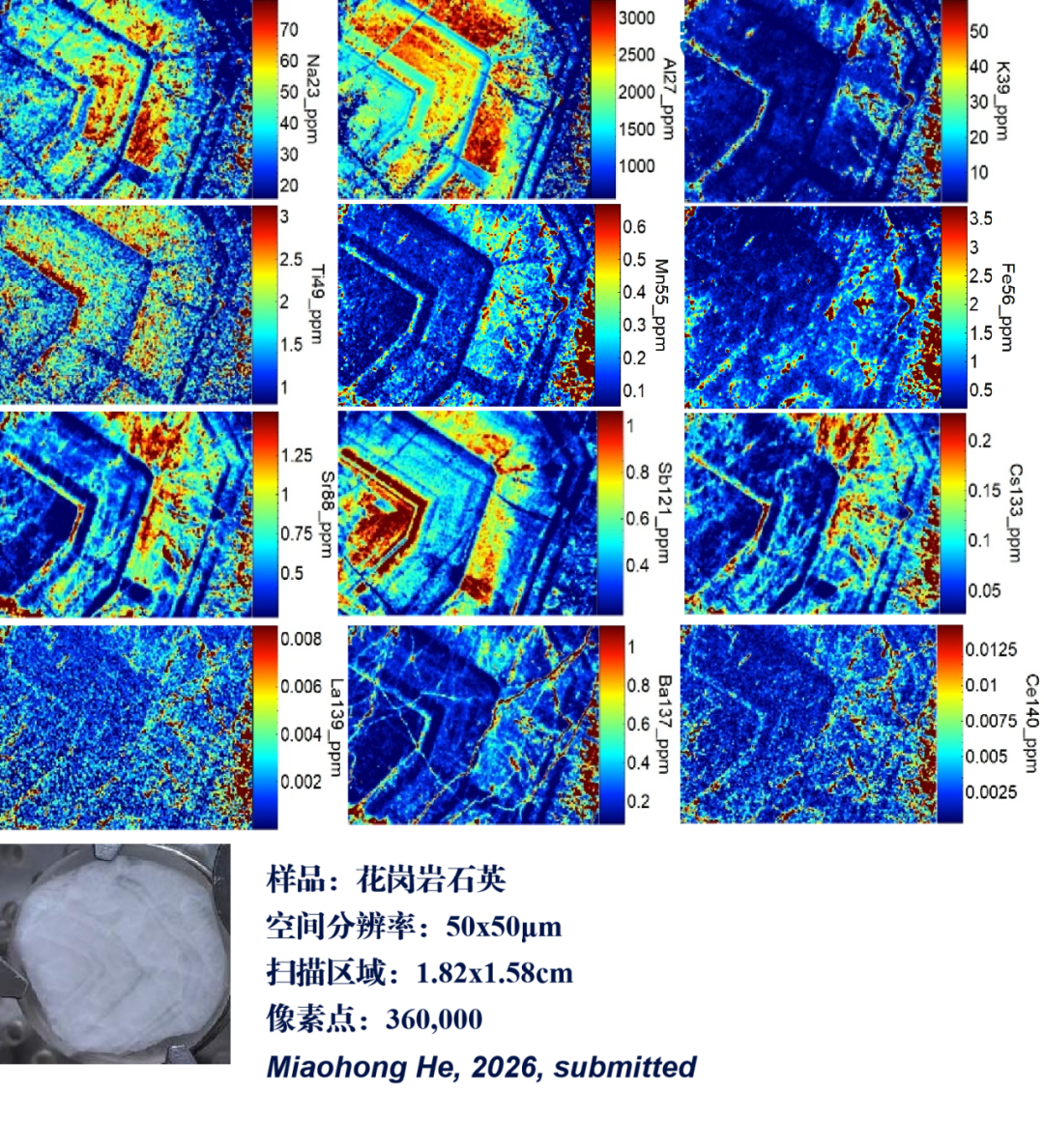
The performance of REEs permanent magnets, luminescent crystals, laser ceramics, and semiconductor single crystals is highly dependent on REEs doping uniformity and trace impurity control. We can directly perform in-situ REEs imaging on quartz, calcium fluoride single crystals, REEs permanent magnet materials, and transparent ceramics, thereby intuitively characterizing their occurrence state, diffusion patterns, and the doping uniformity of REEs, facilitating refinement and manufacturing process optimization.
Life Sciences Field
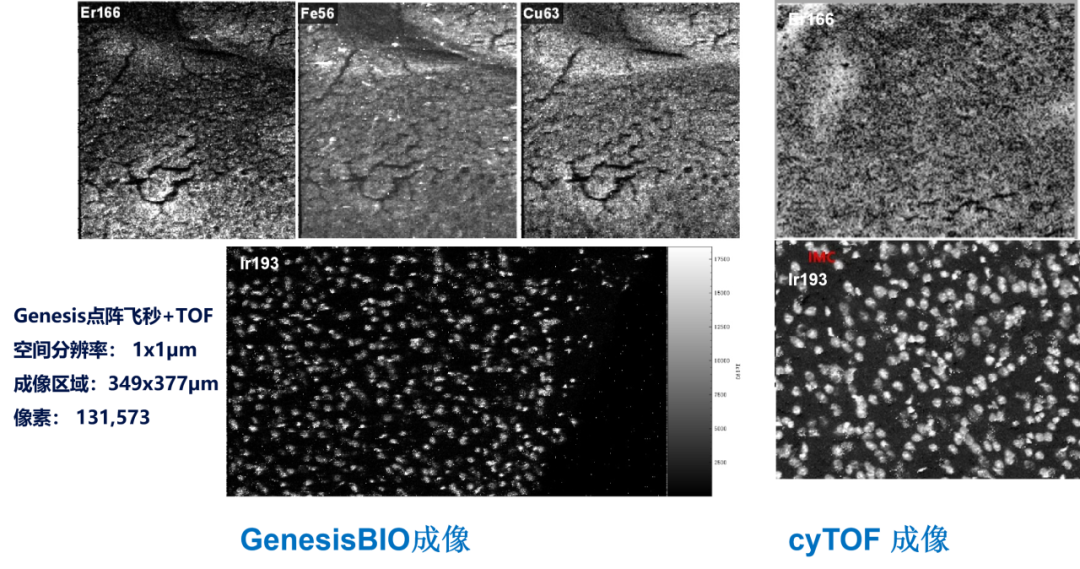
In life sciences research, we conducted an imaging comparison between GenesisBIO-icpTOF and Imaging Mass Cytometry (IMC). IMC is currently one of the mainstream technologies for high-dimensional in-situ protein analysis in tissue. It typically relies on REEs labeling: lanthanide isotopes are chelated and covalently conjugated onto specific antibodies to form REEs-tagged antibody probes for immunostaining and quantitative measurement of tissue sections. Because REEs have naturally extremely low background levels in biological organisms and interference-free signals, REEs are highly suitable for multi-target, high-throughput in-situ protein quantification. However, IMC can only detect lanthanide probes with Z > 75, missing essential endogenous biological elements such as Fe, Cu, and Zn. In contrast, GenesisBIO-icpTOF achieves 1 μm spatial resolution, with imaging sensitivity for REEs probes comparable to IMC, while simultaneously detecting endogenous metallic elements, enabling in-situ co-localization analysis of immune-labeled signals and elemental metabolic profiles, delivering prominent advantages for neuroscience and tumor microenvironment investigations.
Copyright 2024 Shanghai CHEMLAB Instrument Co., Ltd. All Rights Reserved
Shanghai ICP Filing No.65656565