

 News Center
Current Research Status
In the fields of geochemistry and hydrocarbon reservoir research, in-situ U–Pb dating of carbonates has always served as the core tool to link geological timing and evolutionary processes. Accurate and robust chronological data are indispensable for investigating basin tectonic evolution, hydrothermal diagenesis and mineralization, paleoclimatic change, as well as the formation and alteration of carbonate reservoirs.
The global application of in-situ carbonate U-Pb dating has long been hindered by critical challenges, including the shortage of certified reference materials, insufficient homogeneity of available standards and relatively large age uncertainties. Recently, a joint team led by the Chinese Academy of Sciences and Sinopec, in collaboration with nine laboratories across different countries worldwide, has successfully developed the natural calcite reference material named TLM. Comprehensive homogeneity evaluation and high-precision characterization have been completed, and the findings have been published in the top international journal Chemical Geology. This work establishes a new Chinese reference standard for in-situ dating of low-uranium calcite.
Key Breakthroughs:
I. Benchmarking international top-tier standards: TLM calcite reference material with only 0.2% error
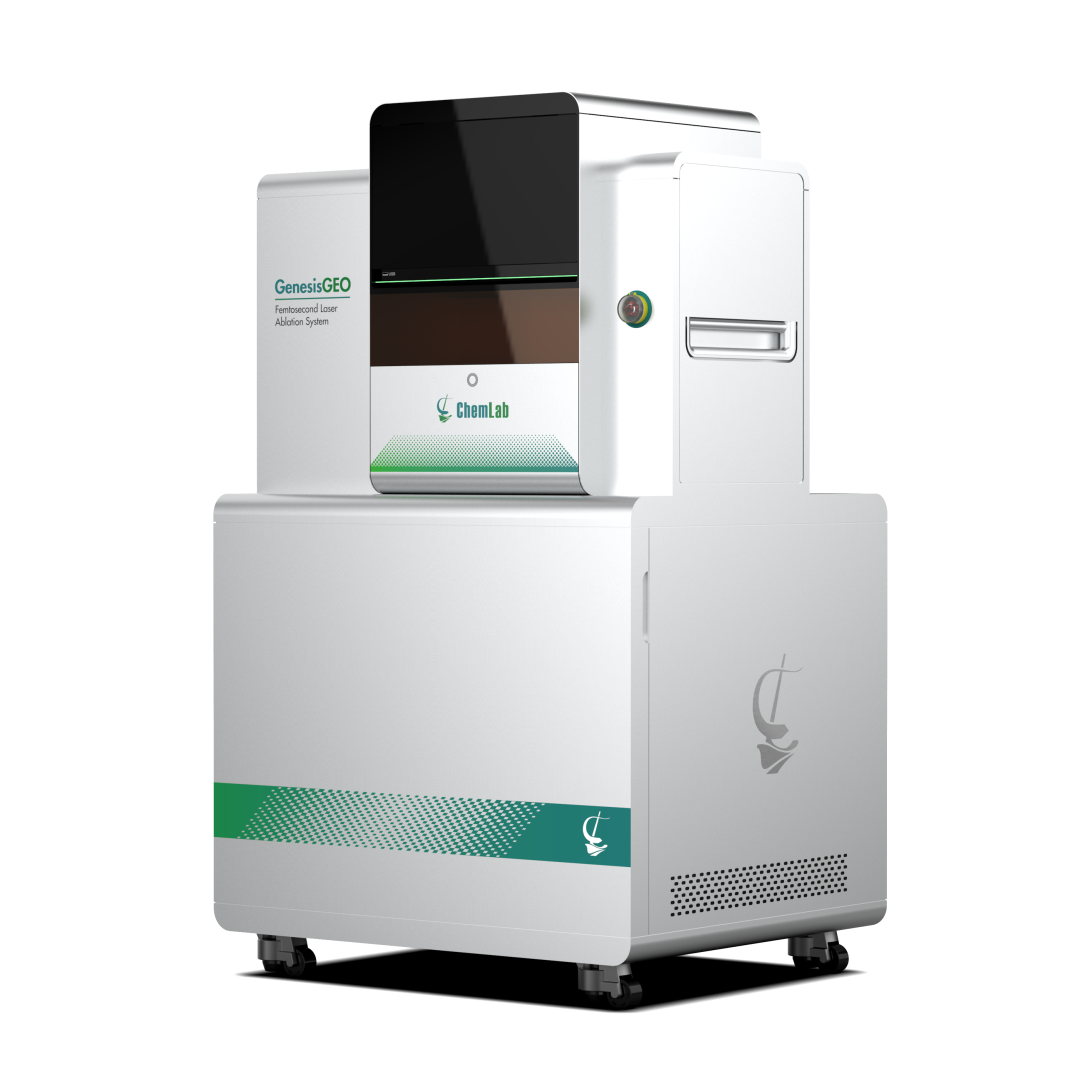
Leveraging years of expertise in in-situ microscale isotopic dating via LA-ICP-MS, ChemLabPro Laboratory conducted high-precision age determination of the TLM calcite standard. The analysis was performed using the GenesisGEO matrix-array femtosecond laser ablation system — fully independently developed and manufactured by Shanghai ChemLab Instruments Co., Ltd. — coupled with a triple quadrupole mass spectrometer.
With unconstrained initial lead composition, the measured age of TLM is 223.0 ± 2.1 (2σ) Ma. This shows merely a 0.2% deviation from the ID-TIMS reference age of 222.5 ± 2.8 Ma (Figure 1). The results also exhibit excellent consistency with datasets obtained from numerous laboratories across the globe (Figure 2), fully verifying the outstanding stability, accuracy and reliability of measurements at an international level.
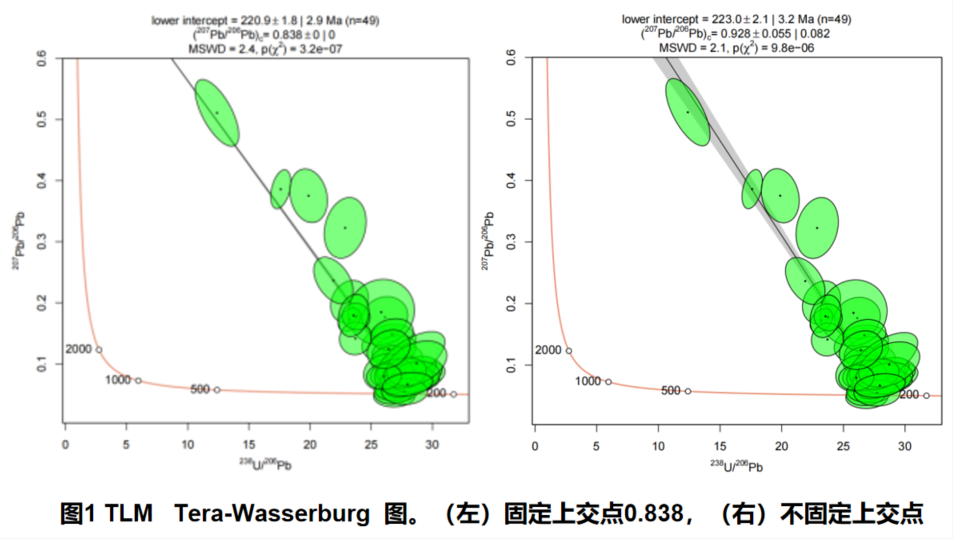
Figure 1: TLM Tera-Wasserburg diagram. (Left) Fixed upper intercept at 0.838; (Right) Free upper intercept
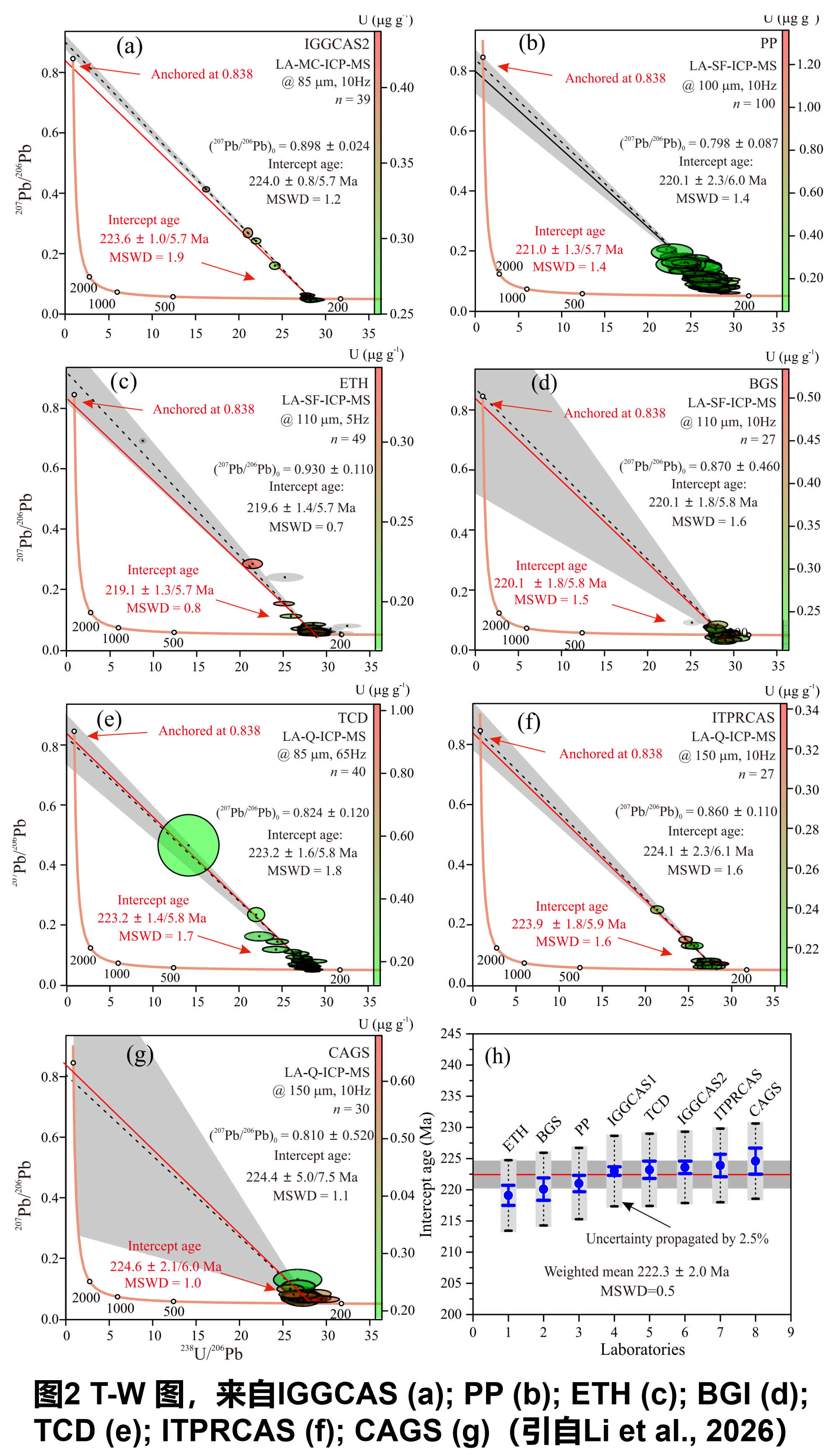
Figure 2: Tera-Wasserburg diagrams from IGG-CAS (a); PP (b); ETH (c); BGI (d); TCD (e); ITPR-CAS (f); CAGS (g) (from Li et al., 2026)
II. Achieving independent domestic breakthroughs in reference materials: Establishment of a complete dating standard suite for Cenozoic calcite and low common-lead dolomite
Building upon the success of the international reference material TLM, ChemLabPro Laboratory and Chengdu ChemLab Instrument Laboratory continue to advance independent research and development of carbonate dating reference materials. Targeting the two major application challenges in dating young Cenozoic strata and dolomite reservoirs, they have respectively developed the MFFJ Cenozoic calcite quality control standard and the QY3 low-common-lead dolomite quality control standard, forming a complete carbonate dating system spanning multiple lithologies and ages—from calcite to dolomite, and from Cenozoic to Mesozoic to Paleozoic.
1. MFFJ Cenozoic Calcite Quality Control Sample
Cenozoic carbonates, due to their young formation age, low uranium content, and significant common lead influence, have long suffered from technical difficulties including poor dating precision, scattered data, and low result reliability, making chronology of young strata a technical bottleneck.
MFFJ is an independently developed Cenozoic calcite in-house monitoring standard from ChemLab Pro Laboratory, with a lower intercept age of approximately 28 Ma (Figure 3). Tailored for calibration in in-situ U-Pb dating of Cenozoic carbonates, it effectively corrects instrumental drift and matrix effects, stabilizes data quality, and improves the accuracy and repeatability of dating results. It provides robust chronological constraints for research on Cenozoic basin evolution, late Cenozoic reservoir formation and paleoclimatic changes.
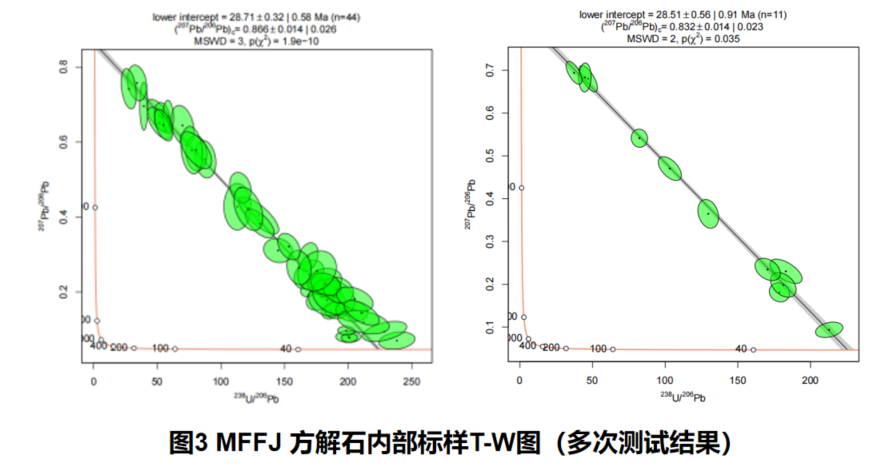
Figure 3: MFFJ calcite in-house standard Tera-Wasserburg diagram (results from multiple analytical sessions)
2. QY3 Low-Common-Lead Dolomite Quality Control Sample
Dolomite chronology research worldwide has long been hampered by a global dilemma: the scarcity of dolomite reference materials, high common lead content and poor sample homogeneity, which hinder high-precision dating of dolomite reservoirs and hydrothermally altered dolomites. To address this shortcoming, the Chengdu ChemLab Instrument Laboratory, in collaboration with Professor Xiao Di of Southwest Petroleum University, developed the QY3 low-common-lead dolomite in-house age standard. The sample originates from saddle dolomite of the Maokou Formation in central Sichuan, with a lower intercept age of ~265 Ma. Featuring minimal common lead interference, excellent matrix homogeneity and superior long-term stability, this quality control standard is well-suited for high-precision in-situ U-Pb dating of dolomite. It serves as a reliable reference for dolomite dating projects worldwide and provides solid chronological evidence for investigating Paleozoic-Mesozoic dolomite reservoir chronology, hydrothermal diagenesis and mineralization evolution, as well as basin tectonic development.
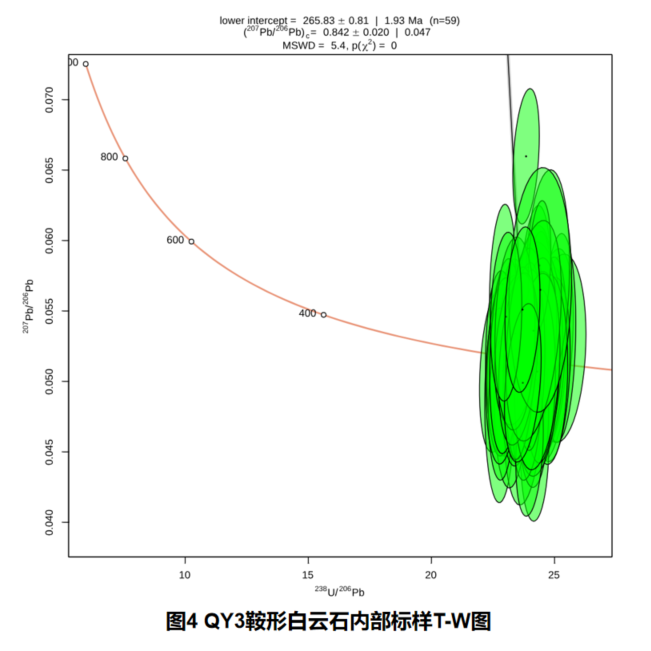
Figure 4: QY3 saddle dolomite in-house standard Tera-Wasserburg diagram
III. Conclusion
This series of achievements, built upon ChemLab Pro deep technical expertise in in-situ isotopic dating, further addresses the problems of scarce reference materials, poor homogeneity, strong common lead interference, and large measurements errors in carbonate U–Pb dating. Notably, the measured age of the TLM calcite standard deviates from its reference value by merely 0.2%.
Furthermore, the in-house developed MFFJ Cenozoic calcite and QY3 dolomite quality control standards have established a comprehensive domestic standard library covering diverse lithologies and geological periods. These breakthroughs fill critical technical gaps in the industry, improve the precision and stability of carbonate dating, and deliver essential support for research on reservoir geology, basin evolution and paleoclimate.
Major Commitment
We sincerely invite geologists and hydrocarbon industry professionals worldwide to jointly utilize our laboratory’s self-developed MFFJ Cenozoic calcite and QY3 dolomite quality control standards to advance high-precision carbonate U–Pb dating!
ChemLab Pro Laboratory proudly launches a zero-risk commitment for in-situ carbonate U–Pb dating:
No valid data, full refund!
We bear the testing risk with our strength, ensuring your research and production are worry-free, assured, and hassle-free throughout the entire process.
Sample Submission Guidelines
1.Single-mineral samples require target preparation, transmitted and reflected light photographs, and target selection with submitted selection photographs (hard copy or digital).
2.Thin sections, probe sections, and polished sections require reflected light photographs, with target selection completed and selection photographs submitted (hard copy or digital).
3.Sample dimensions: length and width not exceeding 9 cm, thickness not exceeding 2.5 cm.
Copyright 2024 Shanghai CHEMLAB Instrument Co., Ltd. All Rights Reserved
Shanghai ICP Filing No.65656565