

 News Center
Recently, the Journal of Analytical Atomic Spectrometry (JAAS), an international journal specializing in analytical chemistry and atomic spectroscopy, published online a research achievement by the team of Associate Professor Dengfei Duan from Yangtze University. Based on the GenesisGEO galvo femtosecond laser ablation system, fully independently researched, developed, and manufactured by Shanghai Chemlab Instruments Co., Ltd., the team innovatively developed the "Raster-spot" scanning mode, effectively addressing the rapid signal decay issue inherent in traditional femtosecond laser ablation and achieving key advances in trace-element analysis and U-Pb dating. The paper indicates that the raster-spot ablation pits feature flat bottoms and walls, signal decay is reduced to approximately 20%, fractionation indices are close to 1, relative errors for most trace elements are within –15% to +15%, and relative standard deviations are below 15%. For in-situ U-Pb dating, the vast majority of relative errors are below 0.5%, demonstrating extremely high dating precision. This study provides an improved analytical mode for the GenesisGEO fsLA-ICP-MS technique, with significant application value for advancing laser in-situ microanalysis.
Raster-Spot Mode – Reconstructing the Scanning Strategy
Femtosecond lasers, owing to their ultrashort pulses and negligible thermal diffusion, significantly reduce elemental fractionation and matrix effects compared to nanosecond lasers, and have become important tools for in-situ microanalysis. However, the rapid signal intensity decay of traditional scanning modes limits their application in analyses requiring long-term stable signals, such as U-Pb dating and trace-element depth profiling.
Associate Professor Dengfei Duan's team, leveraging the hardware and software architecture of the GenesisGEO galvo femtosecond laser ablation system, proposed a novel Raster-spot mode(Figure1).
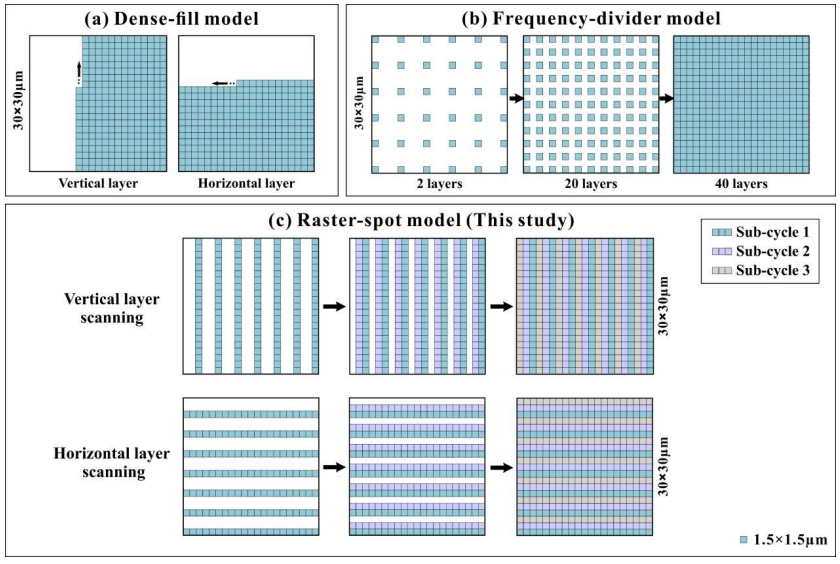
Figure 1. Schematic diagrams of scanning modes
a. Traditional scanning mode; b. Frequency-division scanning mode; c. Raster-spot scanning mode
Core innovations include:
·Decomposing the conventional single-layer scan into multiple "sub-cycles"
·Coordinating laser frequency and scanning speed to achieve "close-packed filling" within each sub-cycle
·Layer-by-layer, deterministic ablation progression, maintaining a consistently flat crater bottom
This structural change transforms aerosol generation from a "burst-type" to a "steady batch" process, maintaining high sensitivity while limiting signal decay to within ~30% (Figure 2).
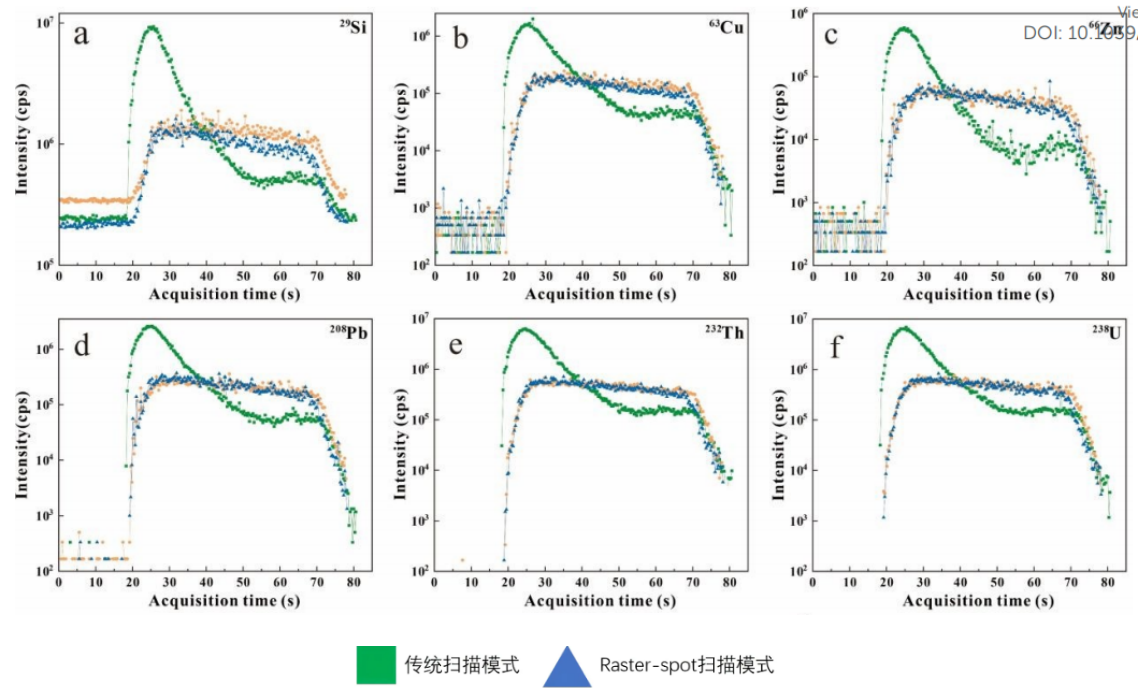
Figure 2. Mass spectrometry signal characteristics of different spot patterns
► Minimal Fractionation Effect
The FI (fractionation index) values for the Raster-spot mode are generally concentrated near 1 (Figure 3), indicating minimal fractionation effects for most elements.
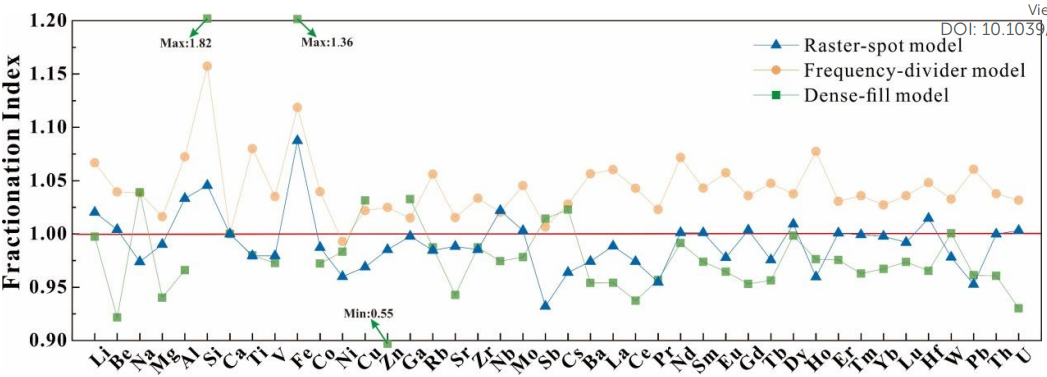
Figure 3. Fractionation indices for different spot patterns
► Accurate and Reliable Trace-Element Quantification
In five standard reference materials (OA-1, OH-1, OJY-1, BHVO-2G, NKT-1G), the relative errors (RE) for 42 elements are within ±15%, and relative standard deviations (RSD) are predominantly below 15%, meeting the general acceptance criteria for LA-ICP-MS analysis (Figure 4).
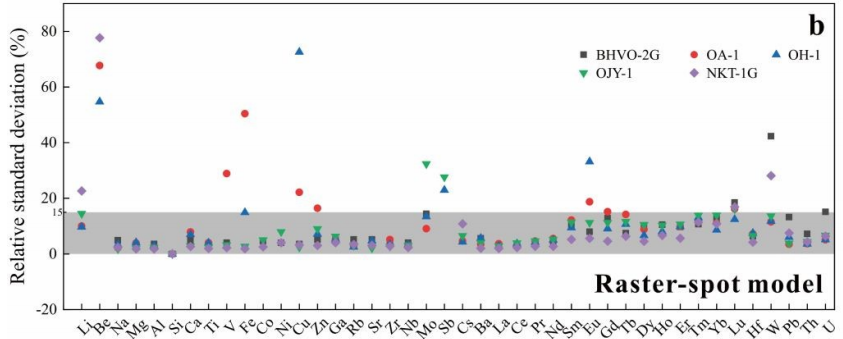
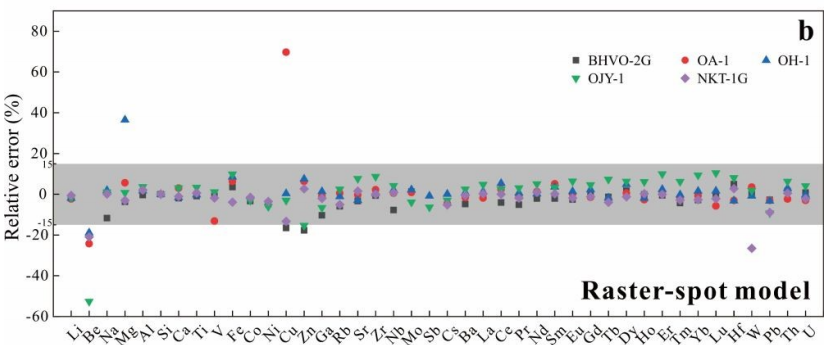
Figure 4. RE and RSD for 42 elements using the Raster-spot mode
► New Record in U-Pb Dating – Error < 0.5%
The Raster-spot mode demonstrated excellent performance in long-duration U-Pb dating of zircon and various accessory minerals, with the vast majority of relative errors below 0.5% (Figure 5).
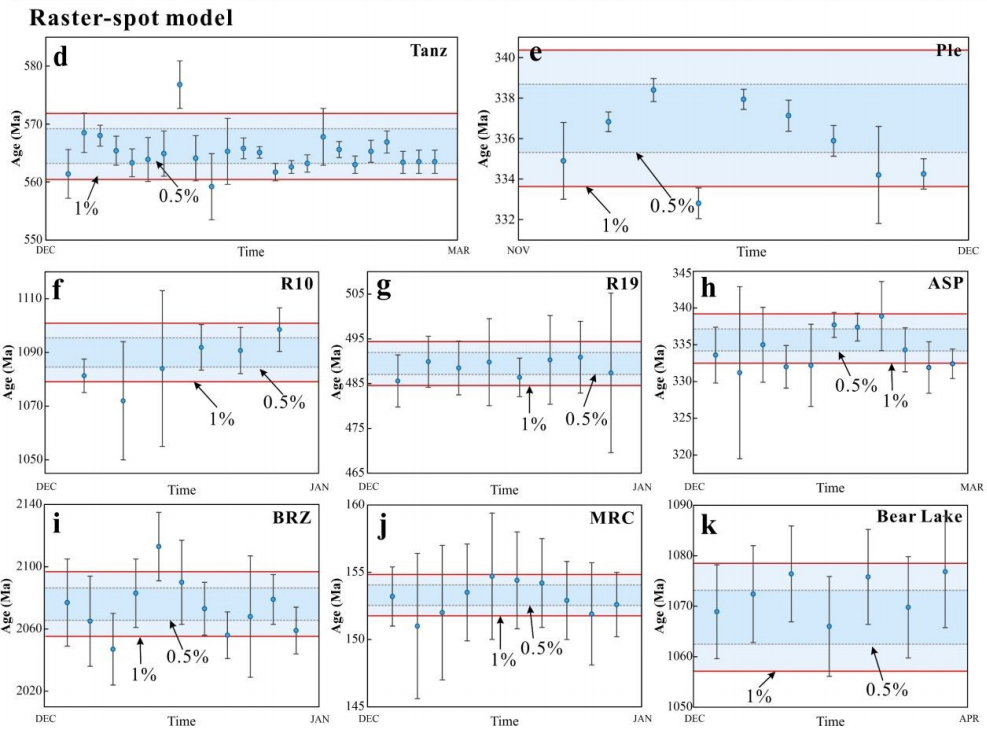
Figure 5. U-Pb dating of various accessory minerals using the Raster-spot mode
【Conclusion】Driving Innovation, Leading the Future
Congratulations to Associate Professor Dengfei Duan and his team for publishing their research in the international journal JAAS. This work represents a significant methodological breakthrough in galvo femtosecond laser ablation. The GenesisGEO galvo femtosecond laser ablation system used in this study was fully independently researched, developed, and manufactured by Shanghai Chemlab Instruments Co., Ltd. The instrument, with its highly flexible parameter adjustability, fully accommodates diverse experimental method designs and effectively supported the development of the innovative Raster-Spot analysis mode. Through deep collaboration for mutual benefit, Shanghai Chemlab will continue to intensify R&D efforts, advance technological innovation and product upgrades, lead the industry with rapid technological iteration, and support cutting-edge scientific research with state-of-the-art analytical platforms, providing inspiration, tools, and technical support for high-level original scientific work.
Paper Information:
Duan, D., Duan, Q., Cao, H., et al. Development and application of a Raster-spot model in Galvo-fsLA-ICP-MS for precise trace-element and U-Pb isotopic analysis. J. Anal. At. Spectrom., 2026, DOI: 10.1039/D6JA00088F.
Copyright 2024 Shanghai CHEMLAB Instrument Co., Ltd. All Rights Reserved
Shanghai ICP Filing No.65656565