

 News Center
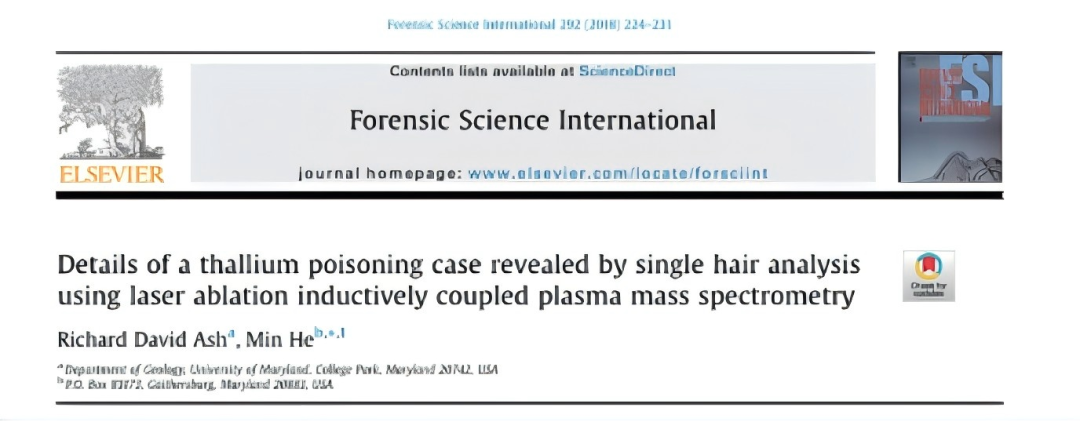
【The Silent "Witness" in the Temperature-Controlled Cabinet】
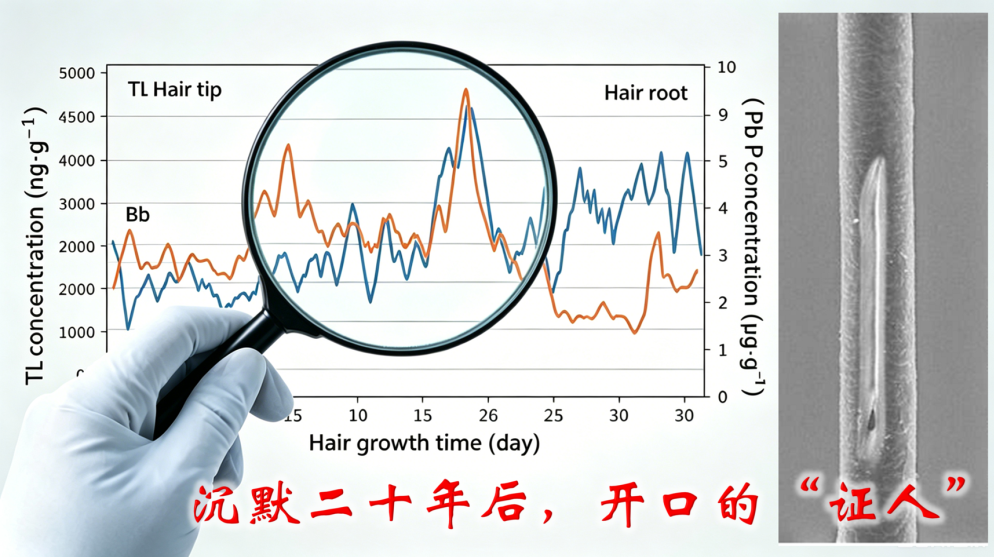
Winter of 1994, Beijing. Several long strands of hair, shed from a blanket, were placed into a transparent evidence bag and pushed into the temperature-controlled cabinet of the evidence room. The cabinet maintained constant temperature and humidity, dimly lit. There they lay for over two decades, like frozen black specimens, silently watching time pass.
They had witnessed the harsh lights of the emergency room, heard the fierce debates in the courtroom, and endured countless media inquiries over the years. But they remained silent. Because the technology of the time could only answer one question: Is there poison in it? Yet it could not answer the more critical question: When was the poison administered? Who carved the calendar of death onto the hair shaft?
It wasn't until 2018 that someone decided to unlock their silence.
The sender, He Min; the recipient, geologist Richard Ash. No special funding, no official commission—only two researchers driven by an almost obsessive conviction to awaken these strands from their silence. The technology had a long name: Laser Ablation Inductively Coupled Plasma Mass Spectrometry, LA-ICP-MS. But the moment that instrument started up, the hair began to speak. Not vaguely saying "yes," but precisely stating—which day, which week, which month, whether the dosage was increasing or decreasing, whether the poison was mixed in food or contaminated on contact lenses.
01【7 cm: Four Months of Chronic Poisoning】
The longest strand of hair (Hair 9, specimen number ZL1995H9) measured approximately 7 cm. To the ordinary eye, it was merely a strand of shed black hair. But under laser scanning, it transformed into a miniature toxicological recorder.
The laser advanced along the hair shaft in micron-scale steps, and the thallium signal unfolded point by point on the screen. Tracing back from the tip to the root—that is, from August to December 1994—initially only a few isolated small peaks appeared, like distant thunder.
In the autumn of 1994, the victim suddenly and temporarily lost her vision. She wore contact lenses at the time and had to switch to glasses after this visual episode. The anomalous peak of up to 530 ng/g in the middle of the hair shaft precisely overlapped in time with this episode of blindness. Based on this, the literature speculates that the thallium was not ingested orally but entered the body through ocular contact, like a deadly tear seeping in.
Entering early December, the signal on the screen turned violently erratic. Thallium peaks became dense and spiked sharply upward from the root direction, revealing an alarming trend of escalating dosage. Stomach pain, nausea, vomiting, tingling and numbness in the extremities, and progressively worsening hair loss—these symptoms did not descend simultaneously; they were precisely encoded along the hair shaft. On December 12th, the first notable hair loss occurred. By the end of December, hair was completely lost. This 7 cm hair shaft was likely painfully pulled from the scalp during those two weeks.
From sparse isolated peaks to dense high-frequency spikes, the signal pattern itself screamed: chronic poisoning was transitioning to acute poisoning; the poisoner was escalating the dose.
02【0.7 cm: The Final Fourteen Days of Madness】
After a brief remission, the victim's hair regrew, and she returned to campus at the end of February 1995.
But the newly grown short hair (Hair 5, specimen number ZL1995H5) was only 0.7 cm long. On this black strand of less than a centimeter, LA-ICP-MS revealed breath-taking information: constant high-dose thallium intake, with concentrations sharply rising between 150 and 500 ng/g, peak intervals of only 0.1 to 0.3 mm, corresponding to approximately 6 to 18 hours. What does this mean? It means that almost every day, or even every few hours, the poison was precisely administered to the victim. More bizarrely, lead signals also showed a significant elevation simultaneously, like another lurking murderer walking alongside thallium.
In early March 1995, delirium, epileptic seizures, convulsions, and eventually coma set in. That 0.7 cm short strand of hair did not record a disease; it recorded a meticulously planned, daily murder that lasted two weeks.
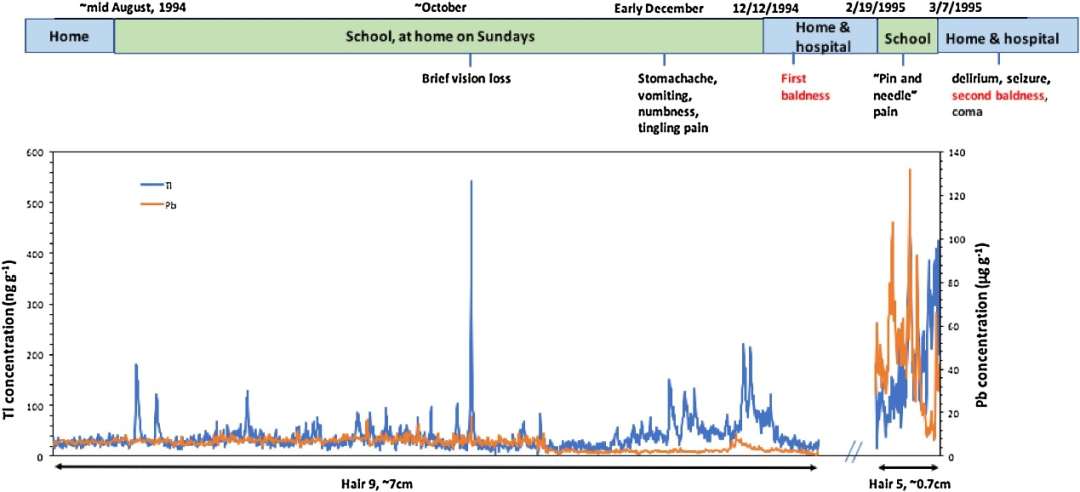
Top: Timeline of the victim's symptom onset and whereabouts from August 1994 to March 1995. Bottom: LA-ICP-MS longitudinal scan results for thallium (blue) and lead (orange) in the two hair strands. The 7 cm long hair recorded the escalating dosage over approximately 4 months of chronic exposure; the 0.7 cm short hair pinpointed the acute collapse in the final two weeks—elemental peaks precisely aligned with the symptom timeline.
This was the first complete reconstruction of heavy metal poisoning temporal dynamics in a real criminal case using LA-ICP-MS. It proves one thing: a single strand of hair is sufficient to support a forensic investigation spanning two decades.
03【Digestion: Silencing the Evidence Permanently】

The 2018 re-examination was a scientific triumph. However, in Chinese forensic laboratories, confirmation of heavy metal poisoning has long relied on a different pathway: wet digestion-solution analysis.
Cut into pieces, add strong acids, boil at high temperatures for several hours. The hair transforms from a black fibrous solid carrying temporal information into a homogeneous, colorless solution. The forensic scientist can read the total concentration and inform the judge that it exceeds the limit by hundreds of times. But what about the peak patterns along the hair shaft? Those dense waves recording the escalating force? Those dates precisely arranged on a micron scale? All were ground down, dissolved, and silenced.
Nothing would please a poisoner more than this—the temporal information of the evidence being legally and thoroughly erased from the examination bench.
04【Thallium Poisoning: A Mystery Frozen in Solution】
April 2006, Hunan. Liu Yahui, the head of an electronics components factory in his fifties, worth over ten million yuan, suddenly began experiencing tingling pain in his toes and fingers, leg pain and numbness, abdominal pain and bloating, fatigue, and drowsiness. He eventually became unable to walk and experienced massive hair loss. Local hospitals were helpless.
In January 2007, a urine sample was urgently sent to West China Fourth Hospital of Sichuan University. Thallium levels were hundreds of times above normal. Subsequent tests on hair and nail samples confirmed the poisoning. Police intervened, with the preliminary judgment being intentional poisoning by another party.
But then what? Those strands of hair were cut, digested, and diluted. They proved poisoning but permanently sealed the timeline. Was the first poisoning three months ago or three weeks ago? Was the dose increased daily or administered intermittently? Was the poison mixed in tea or smeared on doorknobs? The solution could not answer. The temporal code left by the poisoner was permanently erased within the test tube.
05【Ghosts in the Case Files】
Cases Where the Date Could Not Be Revealed:
The Liu Yahui case is not the only one silenced.
2007, the Yang Bing case in Sichuan. Hair and nail tests showed thallium levels tens of thousands of times above normal. Police suspected intentional poisoning. But the poisoning date: unknown.
The Shanghai realgar folk remedy fatal case. High concentrations of arsenic were detected in the hair and blood of a female victim. The prescriber of the folk remedy had no medical knowledge. But when did arsenic begin eroding her body? The digested solution held no record.
The Zhao Meilan case. High concentrations of lead were detected in both blood and hair. The forensic examiner determined it was deliberate poisoning. But was the lead accumulated slowly over three months, or was it a single large dose? After the hair was cut, this critical temporal question was lost forever.

These cases collectively demonstrate one thing: Heavy metal element detection is an indispensable tool for case determination in poisoning investigations. But they also collectively expose a limitation: Analysis after digestion can only answer whether and how much, but cannot answer when and how. The poisoning date, in the case files of these cases, has always been a blank entry.
06【Toxicological Archives Spanning a Century】
The value of hair as a witness extends beyond modern criminal cases. It can even reach out from the grave, pointing a finger at the murderer from a hundred years ago.

The Death of Emperor Guangxu: In 1908, the Emperor Guangxu of the Qing Dynasty died in Yingtai. In 2003, two small locks of his hair were sent to the China Institute of Atomic Energy. Tests revealed high concentrations of arsenic—white arsenic. The century-old mystery was laid to rest: he was poisoned. But traditional post-digestion analysis could only confirm "the presence of arsenic." If laser ablation solid direct sampling technology had been available at the time, it might have been possible to precisely read whether the arsenic was chronically accumulated or acutely administered, and even correlate it to specific dates in the autumn and winter of 1908. The perpetrator's dosing schedule could have been fully reconstructed from a single strand of hair.
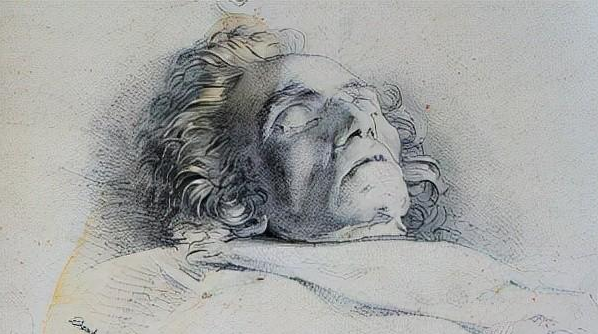
The Beethoven Mystery: Two hundred years ago, his hair was preserved. Scientists found lead levels hundreds of times higher than normal. But where did the lead come from? Lead-laced drinking vessels? Medicinal laxatives? Or something else? A study using LA-ICP-MS to analyze Beethoven's hair medulla revealed that lead levels showed fluctuating distributions along the hair length, identifying nine to ten peak loads that precisely corresponded to the timeline of pneumonia treatments and surgical procedures between December 1826 and March 1827. The elemental curves in the deceased's hair served as a belated medical malpractice determination, reaching across two centuries to identify the true culprit that accelerated his death.
07【From Digestion Analysis to In-Situ Analysis】
The essence of post-digestion analysis is the lawful destruction of the spatial structure of evidence. Cutting, digesting, diluting—three actions that completely obliterate three key pieces of information.
Temporal Dimension: The axial distribution of heavy metals in hair is a growth diary; after digestion, only the average concentration remains. If the Zhu Ling case had only undergone post-digestion analysis, that 7 cm long hair would have only yielded a conclusion of elevated thallium; the dose fluctuations and exposure turning points over four months would have been permanently lost, and the poisoning date would have been untraceable.
Evidence Form: The original specimen is completely destroyed, rendering secondary testing or re-examination impossible. For cases potentially entering litigation, the reproducibility of evidence is crucial.
Pretreatment Risks: Strong acids and high temperatures can introduce contamination; volatile elements like mercury and selenium may escape during digestion; trace signals can be masked by reagent blanks.
Solid direct sampling takes a different path. A single hair is placed flat in the ablation cell. The laser, with a spot size of 50 to 100 microns and energy of a few microjoules, ablates nanogram-scale samples point by point. No cutting, no strong acids, no high-temperature boiling. Elemental signals are presented in real-time along the scan path, and the spatial distribution information is completely preserved.
08【Dot-Matrix Femtosecond Laser Ablation】
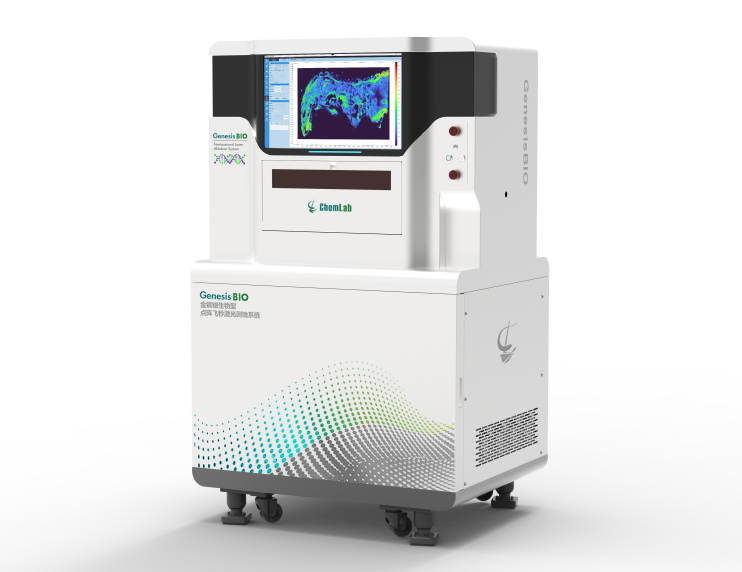
GenesisBIO
Cold Enough, Sharp Enough, Accurate Enough
In a forensic laboratory, a single strand of hair is a miniature contract, signed by the poisoner and the time. To read this contract, the laser must be faster than thermal diffusion, colder than elemental migration, and sharper than memory.
The pulse width of femtosecond dot-matrix laser ablation is compressed to the order of quadrillionths of a second (10⁻¹⁵ seconds). On this timescale, energy lacks time to escape as heat; the material is directly ablated via multiphoton ionization, like a light-made scalpel, completing the cut within a sub-micrometer heat-affected zone. The ablation crater has sharp edges like an engraving tool, with a flat bottom like a mirror. The ablated aerosol particles are uniformly sized and stable, producing a steady signal upon introduction into the ICP-MS, avoiding carbide deposition and elemental fractionation caused by thermal ablation.
What does this mean for human hair, which is only 60 to 80 micrometers in diameter? It means the laser can advance point-by-point along the hair shaft without severing the strand. Each micron is an independent sampling point, and each sampling point corresponds to an actual growth date. Elemental boundaries between adjacent growth periods will not be blurred by thermal diffusion; the four-month peaks on the 7 cm long hair will not be smeared into a mess; the daily poisoning record on the 0.7 cm short hair will not be erased into noise.
fsLA-ICP-MS fills the methodological gap in forensic toxicology from total concentration judgment to temporal reconstruction. It allows hair to be no longer just a biological matrix, but an encrypted diary that can be read page by page. Each page bears a date. And the femtosecond dot-matrix laser ablation is the key to opening this diary—cold enough not to scorch the memory; sharp enough not to blur the boundaries; accurate enough to leave no hidden date unrevealed.
【Conclusion: Every Strand of Hair Is Waiting】
How many more strands of hair are silently waiting in the darkness of the evidence room's temperature-controlled cabinet? They do not need to be cut, nor boiled in strong acids. They only need a beam of ultra-cold, ultra-short laser to read them point by point.
The Chemlab GenesisBIO Dot-Matrix Femtosecond Laser Ablation System is dedicated to providing high-performance solid direct sampling analysis solutions. Our pursuit is not to make the technology itself the protagonist of the story, but to enable every strand of hair to be read with such precision, and every piece of evidence to retain its original time and space—including the poisoning date that lay buried for too long.
Because the truth does not decay. It simply waits to be read.
*Note: Some images in this document are sourced from the internet. Please inform us for removal if any copyright infringement is involved.
References
[1]Ash RD, He M. Details of a thallium poisoning case revealed by single hair analysis using laser ablation inductively coupled plasma mass spectrometry. Forensic Science International, 2018, 292: 224-231.
[2]Li B, Xu W, Luo R, Zhuo S, Guo X, Cheng K, Yun K, Ma D. Estimation of the Frequency and Time of Human Exposure to Arsenic by Single Hair Analysis. International Journal of Environmental Research and Public Health, 2022, 19(18): 11429.
[3]Reiter, C., Prohaska, T. Beethoven’s death—the result of medical malpractice?. Wien Med Wochenschr 171, 356–362 (2021).
[4]Rifai N, Meredith W, Brown K, Erdahl SA, Jannetto PJ. High Lead Levels in 2 Independent and Authenticated Locks of Beethoven's Hair. Clinical Chemistry, 2024, 70(5): 878-879.
[5]刘亚辉铊中毒案. 搜狐新闻.
[6]杨兵铊中毒案. 搜狐新闻/新浪新闻.
[7]上海雄黄偏方致死案. 上海市司法鉴定科学研究院案例报道(法医王鑫经手).
[8]赵玫兰铅中毒案. 网络刑侦报道.
Copyright 2024 Shanghai CHEMLAB Instrument Co., Ltd. All Rights Reserved
Shanghai ICP Filing No.65656565